

In Davos, Vice-Minister of Finance Januš Kizenevič: "Investing in defence is an opportunity to turn security into a source of innovation"
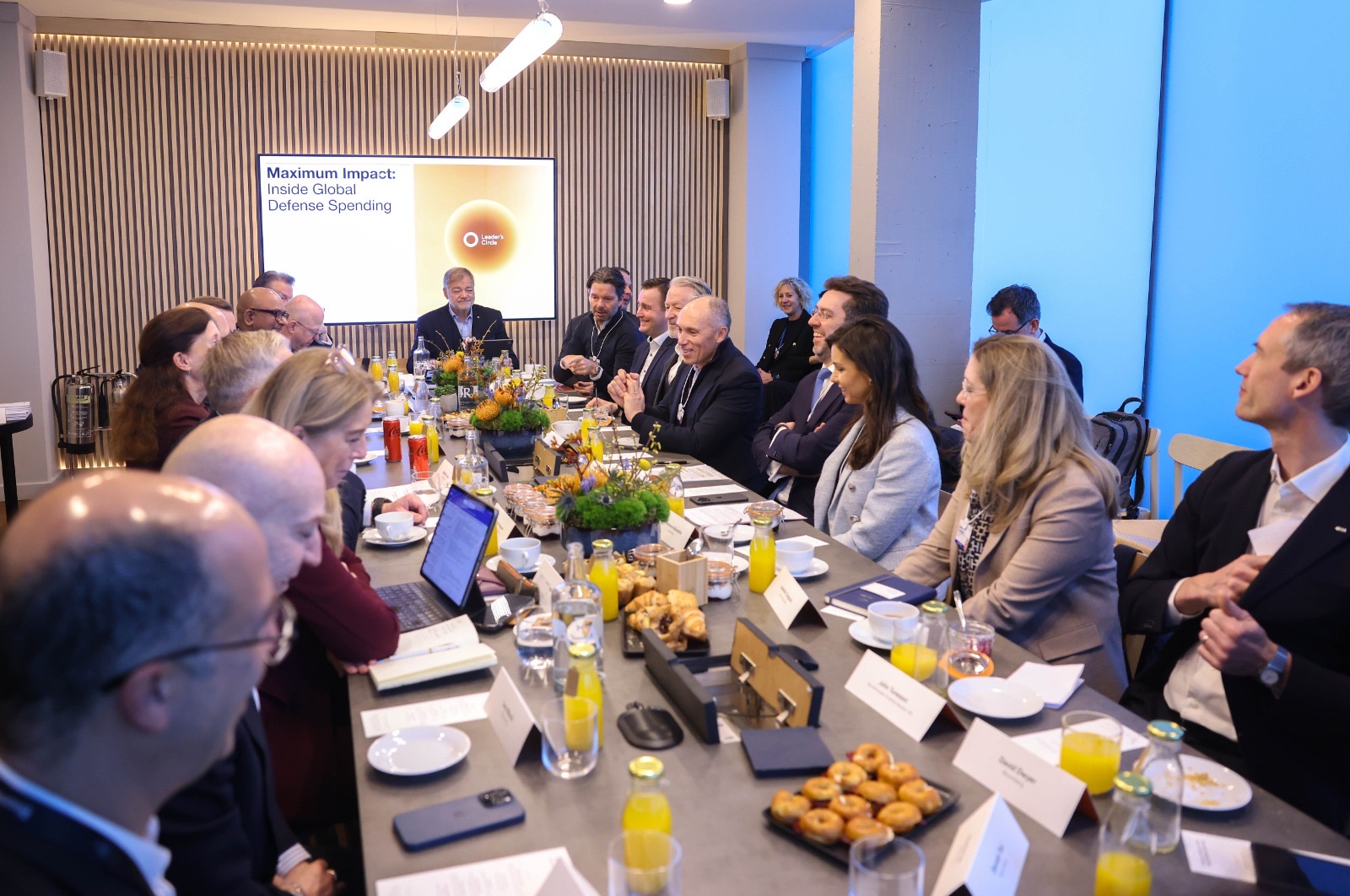
In Davos, Vice-Minister of Finance Januš Kizenevič: "Investing in defence is an opportunity to turn security into a source of innovation"
In a challenging geopolitical environment, international financial institutions and the business sector are increasingly changing their approach to defence investment, which is no longer seen as controversial. According to Vice-Minister of Finance Januš Kizenevič, investments in defence allow not only to strengthen security but also to create a solid basis for innovation and modern scientific solutions. This was highlighted at this week's World Economic Forum in Davos, Switzerland.
According to the Vice-Minister, this sends a very serious positive signal to the market and encourages a much greater involvement of private capital in the research, development and production of defence projects.
In the Leaders’ Roundtable organised by Bloomberg Intelligence with 25 international finance managers and defence analysts from Commerzbank, Deutsche Bundesbank, BlackRock, Barclays, NATO Innovation Fund, BNP Paribas Suisse SA, Aon and other companies, J. Kizenevič stressed the importance of not only increasing investment in innovative defence projects but also encouraging the search for additional financial resources.

"Together with world leaders in finding the best solutions to today's threatening geopolitical situation, we agree that easier access to funding strengthens Europe's defence industry, boosts the innovation ecosystem and strengthens the resilience of both the EU as a whole and individual Member States. We need to pay special attention to this", Vice-Minister of Finance Kizenevič stated.
According to him, higher defence spending is relevant not only for Lithuania or the countries of the eastern region, and a strong European defence industry would ensure both economic and geopolitical resilience.
J. Kizenevič stresses that adequate funding in the next EU Multiannual Financial Framework 2028-2034 is essential to achieve the EU’s ambitious goals. According to him, the budget of almost EUR 2 trillion proposed by the European Commission provides a solid basis for further negotiations.
The Vice-Minister notes that Lithuania supports the proposals to increase defence funding, from EUR 131 billion allocated to defence from the Competitiveness Fund to the strengthened Connecting Europe Facility (CEF) and significantly increased investment in military mobility. Lithuania also supports a permanent support mechanism for Ukraine with EUR 100 billion in loans and grants.
During his visit to Davos, the Vice-Minister also met with representatives of Revolut, the global stock exchange NASDAQ, the largest Polish bank PKO Bank Polski, one of the world's largest cybersecurity companies Palo Alto Networks, international private equity fund CVC, one of the largest investment banks Goldman Sachs and other companies.
The Vice-Minister also participated in discussions with the leaders of Poland, Finland, Estonia, Latvia, Sweden, Denmark and Ukraine, discussing the future of European stability and strategic cooperation, and discussing leadership and collective efforts to ensure a safer and more stable Europe. The resilience of the financial ecosystem through the deployment of innovative, safe financial services was also discussed.
Together with Erkki Keldo, Minister of Economy and Industry of Estonia, and Rafał Rosiński, Minister of Digital Affairs of Poland, Vice-Minister J. Kizenevič participated in a discussion on competition challenges in times of geopolitical tensions and solutions relevant to the countries of the eastern EU region.
"The Baltic countries and Poland are at the epicentre of today's geopolitical fracture and need to shape the economic strategy in an environment of heightened risk. This is a major challenge but also an opportunity: with innovative, thought-out decisions, the eastern flank of the European Union can become a successful example of a resilient, future-oriented economic transformation", J. Kizenevič says.
It is reported that more than 3,000 leaders from around the world have gathered in Davos this year, including US President Trump, 850 CEOs and board chairs of various financial companies.
Last updated: 23-01-2026
Related news:
Fitch Ratings endorsed the credit rating previously granted to Lithuania
Moody’s Investment Service assessed Lithuania‘s economic outlook