

The Ministry of Finance and the Bank of Lithuania will offer residents a simpler way to lend money to the State and earn a return
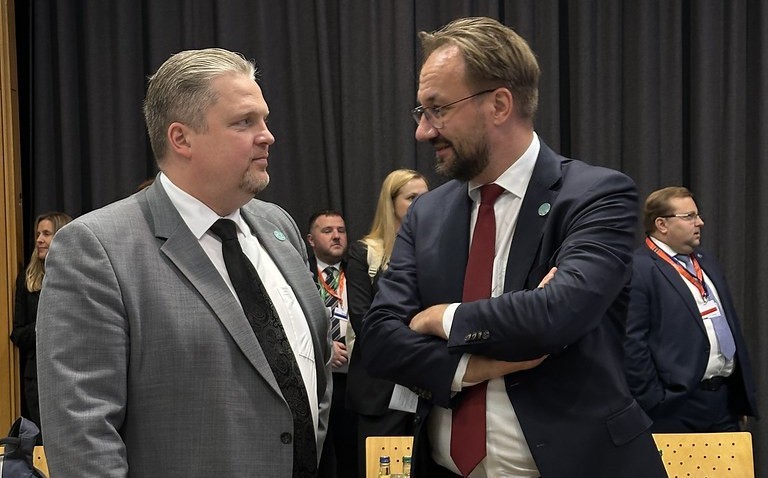
The Ministry of Finance and the Bank of Lithuania are taking the initiative to create a new investment instrument—accessible to both the public and businesses—for investing in the State. This week, Minister of Finance Taurimas Valys and Chairman of the Board of the Bank of Lithuania Gediminas Šimkus discussed this initiative with Speaker of the Seimas Juozas Olekas. The aim is to enable the convenient purchase of bonds in small amounts, ensure a return reflecting market conditions, and provide the option to sell the bonds prior to maturity.
"We want lending to the State to be simple, even for those who can only invest small amounts. That is why, together with the Bank of Lithuania, we are seeking a solution that would allow residents to conveniently lend to the State and earn a market-based return. For the State, this would mean a broader range of funding sources; for residents, it would offer another way to put their savings to use," Minister of Finance Taurimas Valys says.
"Currently, the majority of Lithuania’s public debt is financed by foreign investors, meaning that most of the interest paid on it leaves the country. If Lithuanian residents participated more actively, a larger share of these funds would remain within the country. To make this option attractive, it is essential to ensure a simple and easily accessible way for individuals to lend to the State," Gediminas Šimkus, Chairman of the Board of the Bank of Lithuania, states.
More choice for residents
Consideration is being given to a scheme allowing individuals and businesses to lend money to the State—even in small amounts—and earn interest at market rates. The aim is to establish this as a permanent investment option.
As the measure is developed, plans will be made to ensure a user-friendly trading process for the public and to clearly communicate the investment terms.
Deposits held by Lithuanian residents in banks and other financial institutions exceed EUR 30 billion. A significant portion of these funds is held in accounts that pay little to no interest. This new measure would offer an additional option for residents wishing to invest a part of their savings.
From defence bonds to a permanent investment opportunity
"Public interest in lending to the State is evident from the defence bonds which have already been distributed for more than EUR 1 billion. However, this instrument has certain limitations, so the aim is to expand investment opportunities," Minister of Finance Taurimas Valys notes.
The Ministry of Finance and the Bank of Lithuania will soon evaluate potential ways to implement a new instrument. They will examine how to ensure a simple bond purchasing process, which trading options would be most convenient for the public, and what technical and legal changes would be required. They will also assess how to align the new instrument with existing state borrowing mechanisms.
The goal is to develop a long-term solution that appeals to individuals investing both smaller and larger amounts.
Broader sources of funding for the State
It is important for Lithuania to have a diverse range of funding sources, including a strong domestic investor base. As many countries increase their borrowing, competition for investor capital is intensifying.
Currently, foreign investors fund approximately three-quarters of Lithuania’s public debt. Greater participation by Lithuanian residents would help expand domestic borrowing and ensure that a larger share of the interest paid on government bonds remains within the country.
The public debt currently stands at around EUR 40 billion. Interest payments are projected to reach approximately EUR 1 billion in 2026 and could rise to EUR 1.5 billion by 2028. As financing needs grow, a broader investor base would help strengthen the State’s financial resilience.
A concrete proposal could be prepared within the coming months. Should the initiative require legislative amendments, these could be considered during spring session of the Seimas.