

At ECOFIN meetings, updated plan "New Generation Lithuania", recommendations on euro area economic policy governance
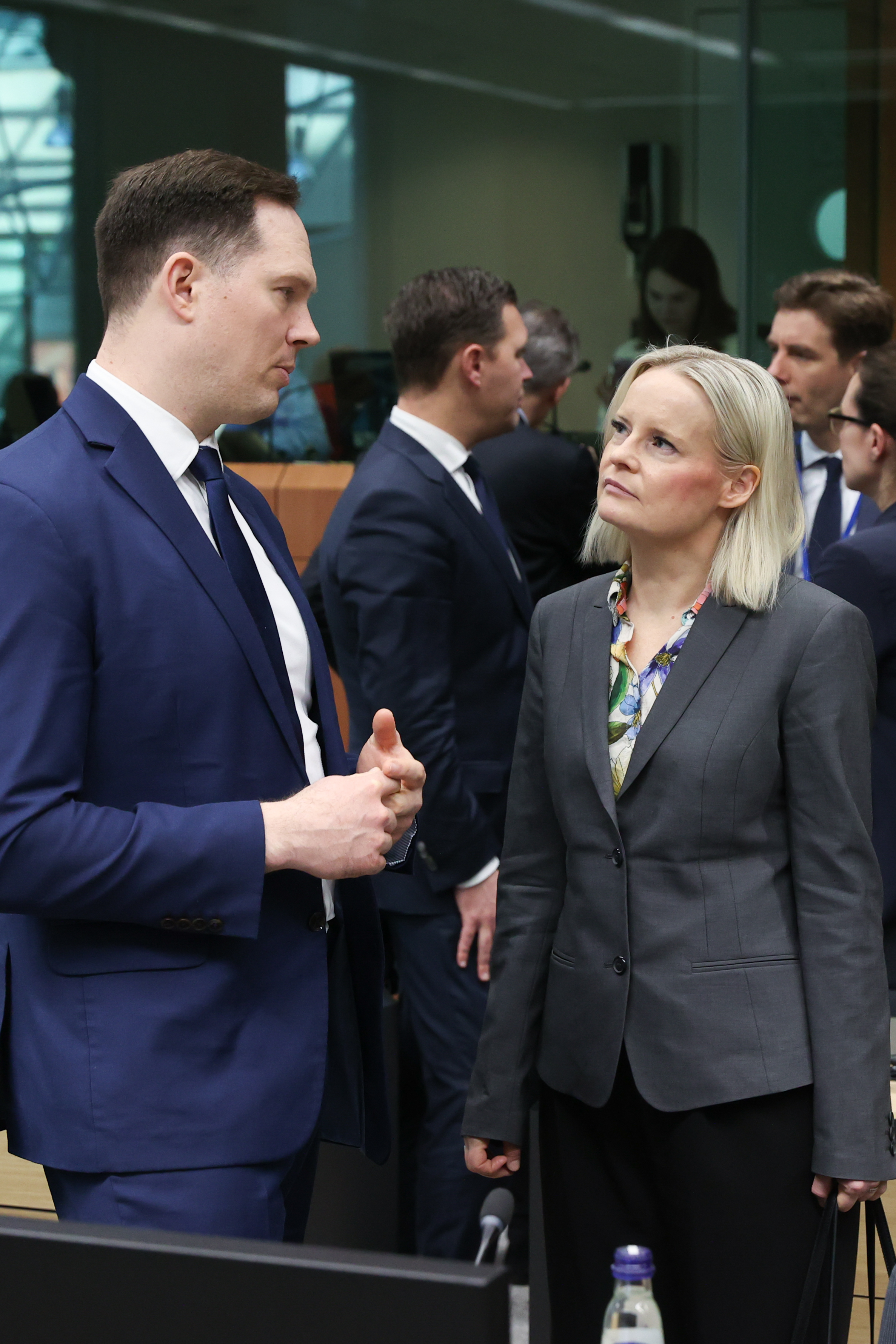
On 16-17 February, Minister of Finance Kristupas Vaitiekūnas will attend the meetings of the Council of Economic and Financial Affairs Ministers (ECOFIN) and the Eurogroup (EG) of the European Union (EU) in Brussels, where the revised plan "Next Generation Lithuania" (NGL) will be approved, support for Ukraine, and recommendations for the euro area economy will be discussed.
In December, the Ministry of Finance formally submitted to the European Commission the fourth modification of the NGL plan, the aim of which is to adjust risky milestones and targets, simplify descriptions of measures and milestones and targets in order to facilitate reporting on their implementation.
“The modification of the plan “Next Generation Lithuania” is a strategic step, ensuring that the plan reflects the real implementation situation and that all planned commitments are successfully implemented in 2026, without leaving the risk of not achieving the milestones and targets and therefore not receiving the necessary funding. According to the approved plan, almost EUR 79 million from other risky measures will be redistributed to the increase of the authorized capital of the National Development Bank ILTE for the purpose of green transformation. The plan also redistributes funds to high-demand renewable energy measures such as solar energy generation and storage of electricity from RES", Minister of Finance Kristupas Vaitiekūnas stated.
Almost all of the proposed changes concern the revision of investment instruments. The funds are reduced for measures that have not attracted the interest of the applicants, some of the projects have been refused by the project operators or the implementation of the projects due to the delayed activities already exceeds the maximum time limits provided for in the EU regulations.
To date, the Recovery and Resilience Facility (RRF) instrument has disbursed a total of EUR 394.05 billion, of which EUR 238.17 billion in grants. The total RRF funds currently planned to be disbursed are EUR 577 billion, of which EUR 359 billion in grants. Lithuania’s share amounts to EUR 3.849 billion, of which EUR 2.289 billion are grants.
At the ECOFIN meeting, the European Commission will also present the next steps on the implementation of additional EU financial support to Ukraine.
"I am delighted that the European Commission's latest proposal – EUR 90 billion in funding for Ukraine in 2026-2027 – has already been approved not only by the Council of the EU, but also by the European Parliament. This provides a good basis for the approval of a new IMF programme for Ukraine in the near future. All the remaining steps must be taken urgently so that additional funding reaches Ukraine as early as at the beginning of April. We also believe that there should be a return to the discussion on a reparation loan based on Russian-mobilised assets, as Ukraine will need additional financial support beyond 2027," K. Vaitiekūnas emphasized.
The ECOFIN meeting will also include discussions on the Savings and Investments Union supplementary pensions package and the Regulation on the Pan-European Personal Pension Product (PEPP). At the meeting, a Council recommendation granting a derogation to Austria from the envisaged net expenditure growth limits on defence financing and a Council recommendation on the discharge to be given to the Commission in respect of the implementation of the EU budget for 2024 are scheduled to be approved. Finance ministers will also receive, for endorsement, conclusions on the EU budget guidelines for 2027 and a Council recommendation on the economic policy of the euro area for 2026-2027.
The Council recommends that euro area countries maintain fiscal sustainability, where relevant through flexibility clauses for defence financing, implement the RRF by August 2026, strengthen labour markets, including by improving skills and education and the quality of jobs, improve the functioning of the single market and promote investment in innovation and strategic sectors, establish a European Savings and Investments Union to mobilise capital, strengthen the role of the euro in the further development of the digital euro and safeguard financial stability by monitoring risks and vulnerabilities.
At the Eurogroup (EG) meeting, ministers will be presented with the issue of the international role of the euro in promoting the sovereignty of European monetary policy, as well as a discussion on global trade imbalances and possible steps to contain them in the face of growing geo-economic risks.
During his visit to Brussels, the Minister of Finance will also meet with Raffaele Fitto, Executive Vice-President of the European Commission (EC), to discuss the implementation of the Pact for the Eastern Border Region of the EU and relevant issues of the upcoming Lithuanian Presidency of the Council of the EU in 2027.
Last updated: 17-02-2026
Related news:
Giraitės ginkluotės gamykla AB expands its supply with anti-drone cartridges
Creditor protection in insolvency proceedings will increase next year
ECOFIN meeting – Debate on protecting European businesses and farmers
Defence bonds were distributed for EUR 85.6 million across recent issues