

The Baltic States and the EBRD updated the agreement on the development of the capital market in the Baltic region
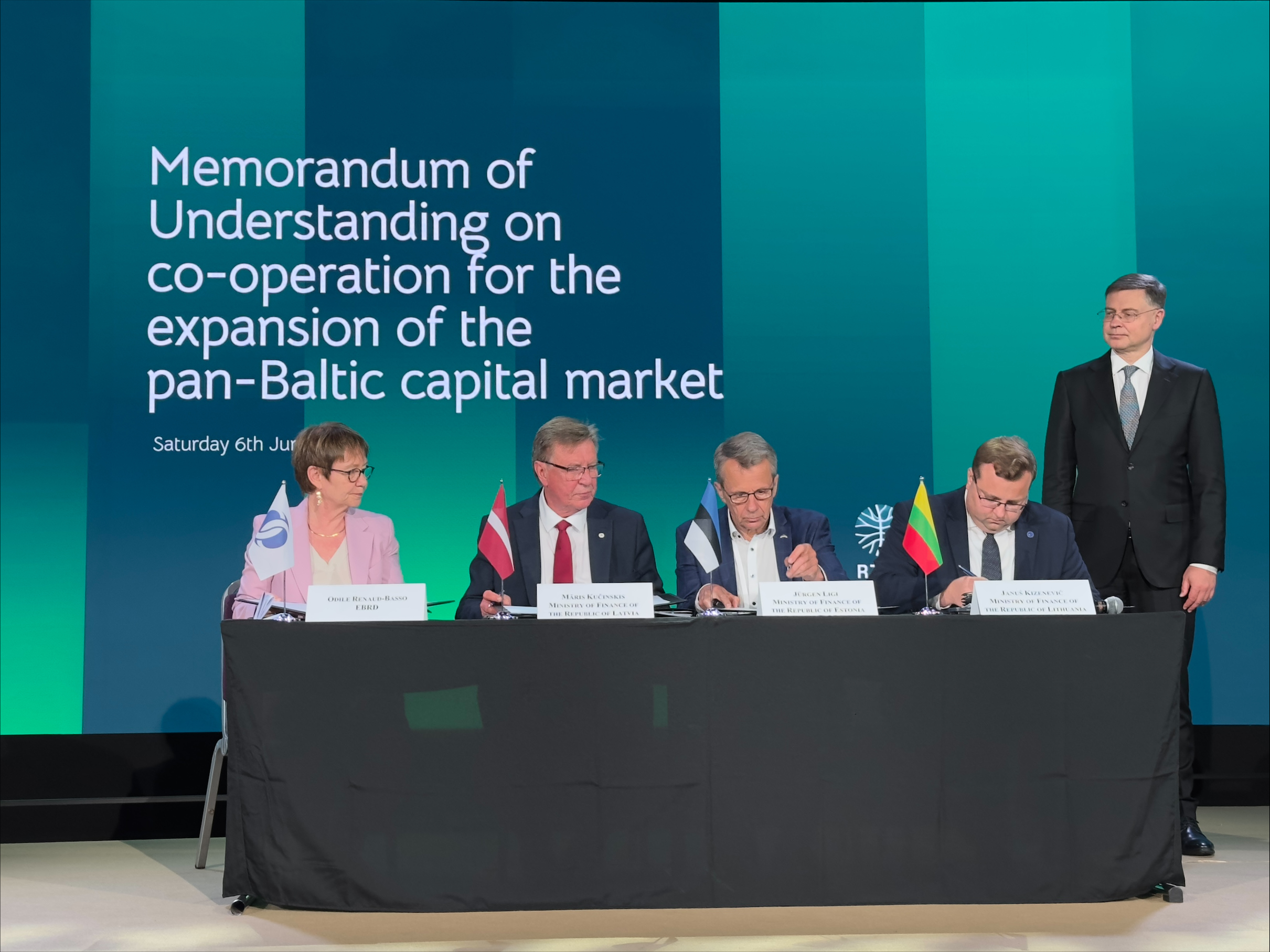
Today in Riga (Latvia), Vice-Minister of Finance of Lithuania Januš Kizenevič, together with Minister of Finance of Latvia Māris Kučinskis, Minister of Finance of Estonia Jürgen Ligi and President of the European Bank for Reconstruction and Development (EBRD) Odile Renaud Basso signed an updated memorandum on the development of the common capital market of the Baltic States. The updated Memorandum signed in 2017 aims at integrating and deepening the Baltic capital markets into the regional capital market with a view to granting the Baltic States Index the status of MSCI (Morgan Stanley Capital International) Emerging Market.
“A well-functioning capital market is one of the key pillars of a modern economy. It enables businesses to attract financing from a wide range of sources, going beyond bank loans and offering broader investment opportunities to citizens. Strong capital markets ensure a more efficient allocation of capital by directing resources to the most productive and innovative sectors of the economy, thus promoting long-term economic growth", Vice-Minister of Finance Januš Kizenevič said at the time of signing the Memorandum, adding that for small and open economies such as Lithuania, it is particularly important to act together with regional partners, therefore, the development of the Baltic capital market is one of the most important priorities of Lithuania's financial diplomacy.
The updated memorandum sets out the main directions on which a joint action plan will be drawn up. The measures implementing this plan will aim to remove obstacles to cross-border investment activities, enable the Baltic States' Index to meet the higher criteria of the MSCI classification in the future, strengthen the interoperability of capital market infrastructure, promote the admission of new companies to the stock exchange, develop new financial instruments and increase the activity of retail investors. It is also envisaged to assess the need to set up regional investment funds in strategic areas such as green energy, technology and infrastructure.
According to the Vice-Minister, a stronger regional capital market is important not only for the Baltic States, but also for the competitiveness of the European Union as a whole. It would help mobilise private investment more effectively, increase the region’s visibility on international financial markets and strengthen economic resilience in the face of geopolitical challenges.
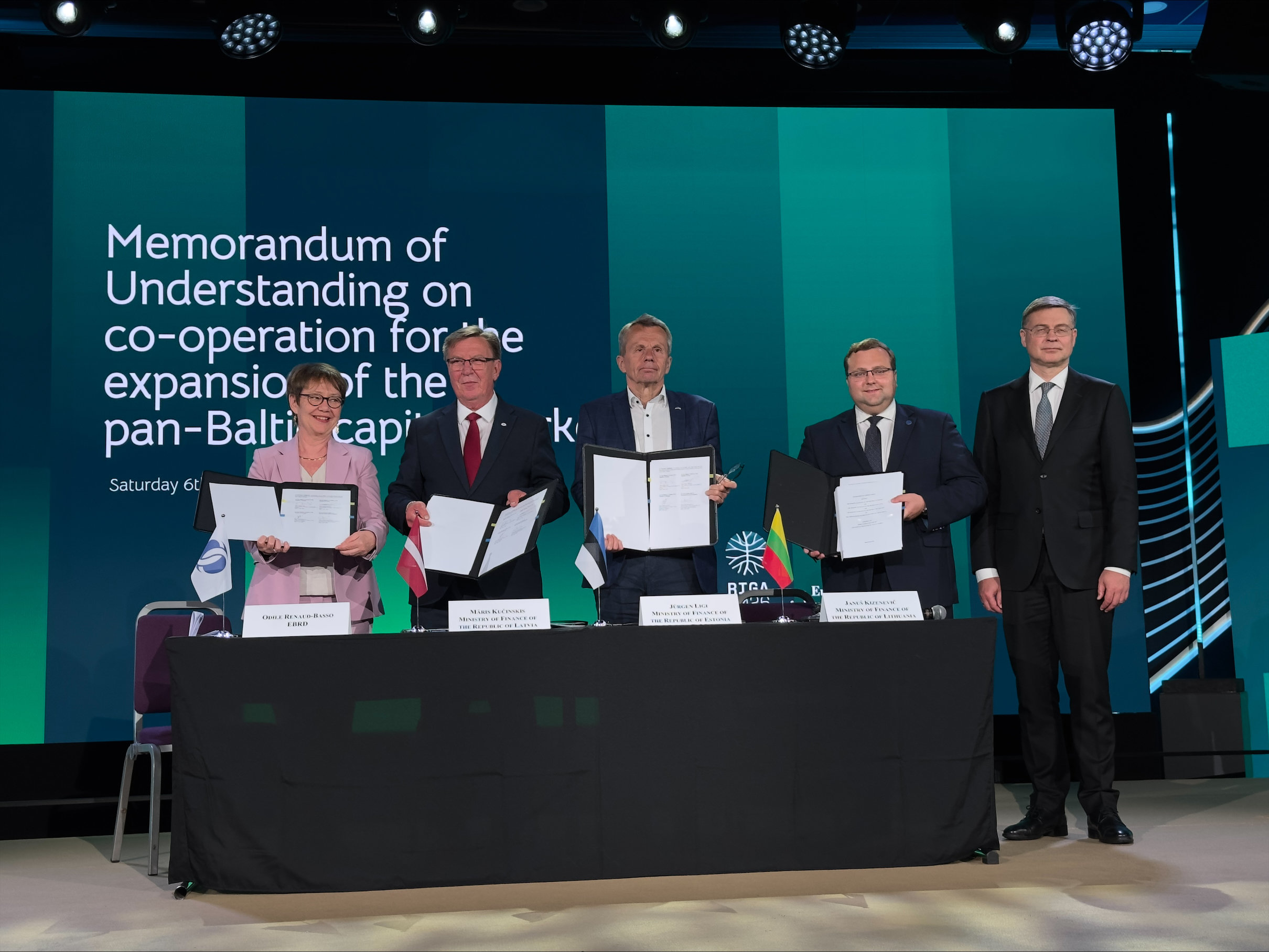
The ultimate aim of the Memorandum is to create assumptions that the Baltic States Index would in the future meet the criteria required for the transition to the MSCI Emerging Markets category, which would significantly increase the visibility of the region in the eyes of global investors.
The implementation of the memorandum will be overseen by a Steering Committee, which will develop a concrete action plan and coordinate further capital market development initiatives in the Baltic region. The Committee's plans include: identifying remaining barriers to cross-border activity, including in the legal and regulatory environment, supporting the creation of links and the strengthening of interoperability between Baltic and other central securities depositories in order to facilitate cross-border settlement and improve market access, fostering market development and listing, attracting new issuers, from small and medium-sized enterprises (SMEs) to large companies and expanding investment opportunities for local and foreign investors, creating a unified and recognisable brand for the entire Baltic capital market, establishing a pan-Baltic Sandbox platform, etc.
You can find the full text of the memorandum here.
Last updated: 30-07-2026