

Discussion with WHO representatives: healthy and productive people as a guarantor of the country's economic growth and sustainable development
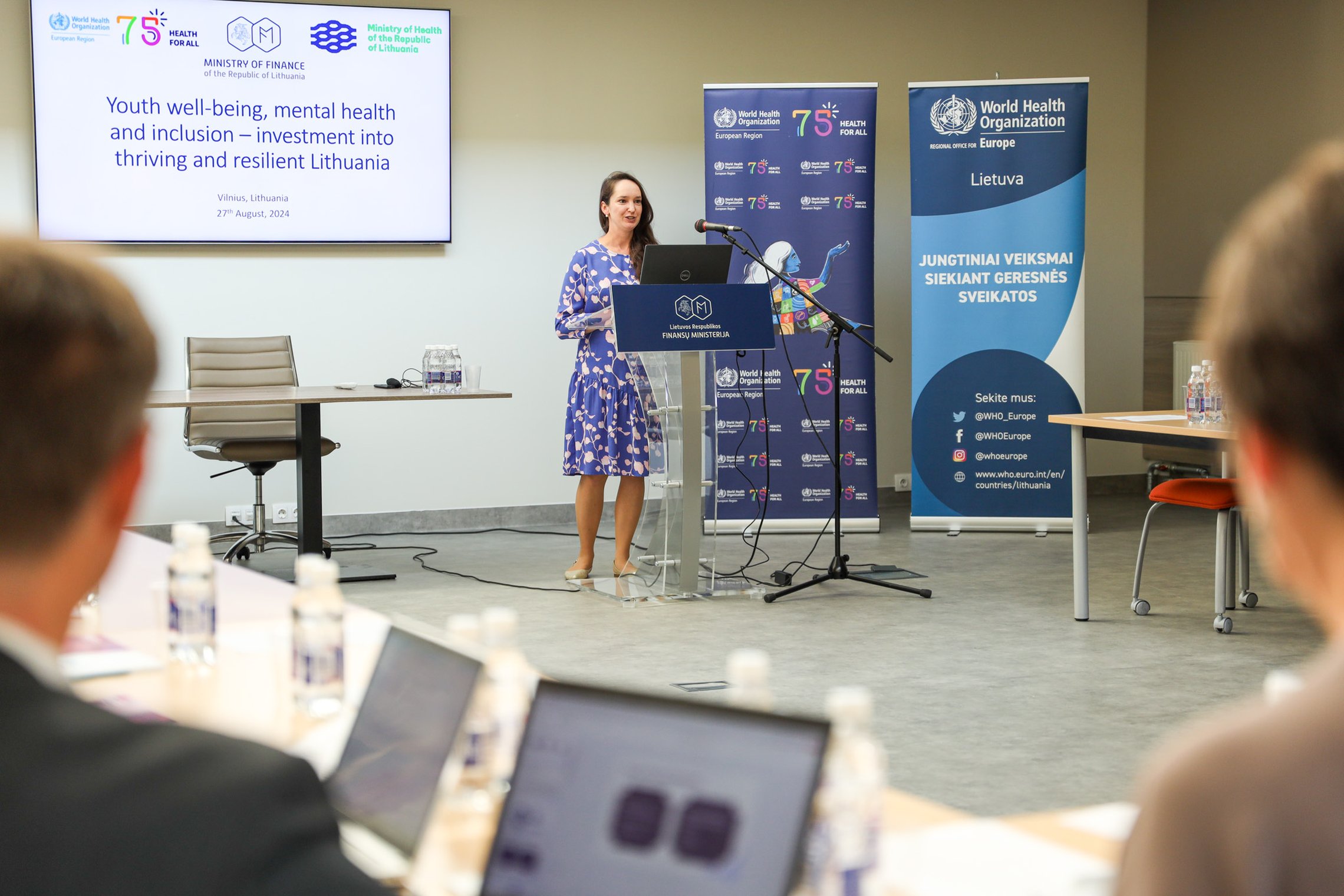
At the meeting of the Ministry of Finance with representatives of the World Health Organization (WHO) Regional Office for Europe (Copenhagen, Denmark) and the WHO European Office for Investment for Health and Development (Venice, Italy) visiting Lithuania, the links between investment and well-being, mental health and inclusion of young people were discussed. A model of quality of life growth, developed at the initiative of the Ministry of Finance, was also presented, which assesses how the measures implemented by the state contribute to the well-being of the population.
“We are happy to share the steps we are taking in Lithuania to analyse the impact of investments on health as an important contributor to quality of life. It is essential that we all understand that investing in emotional well-being and prevention is the best way to save public money. As a result, almost EUR 40 million has already been planned for changes in public mental health. The most vulnerable groups – children, adolescents, children with disabilities and their parents and carers – will receive help,” Vice-Minister of Finance Vaida Česnulevičiūtė-Markevičienė said.
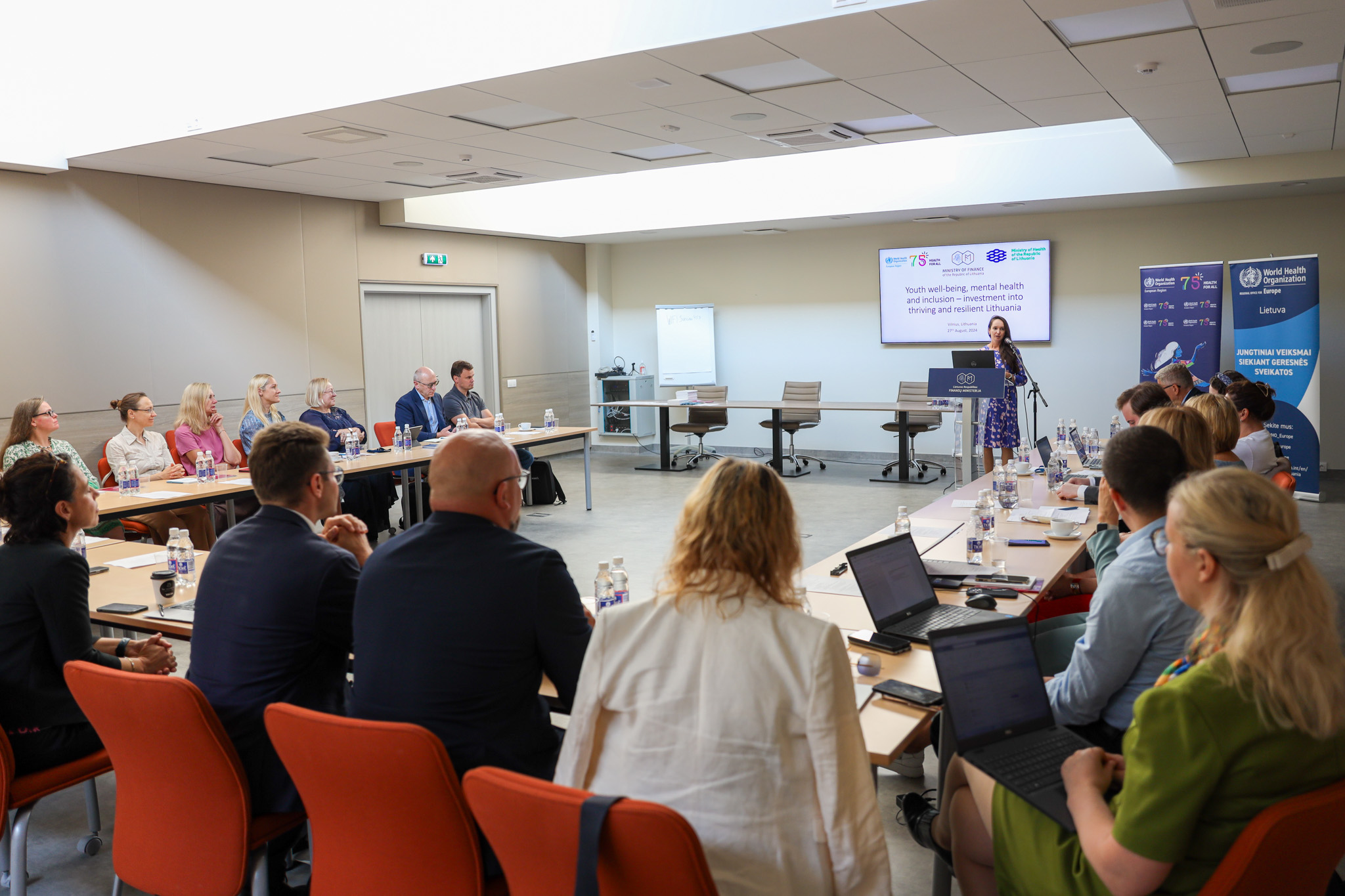
According to the Vice-Minister, a high level of mental health and well-being of the population is an important economic factor ensuring a creative society that is resilient to stress and other threats. It would also benefit the state by strengthening the country’s economy and increasing competitiveness.
According to V. Česnulevičiūtė-Markevičienė, Lithuania plans to invest almost EUR 1 billion of the State budget and European funds in the field of health by 2030. Lithuania is undergoing a broad health reform, which includes not only the restructuring of the network of personal health care institutions and the provision of services, training and upskilling of health professionals, but also investments in the prevention of health threats.
Moreover, according to the Vice-Minister, the Ministry of Finance, as the coordinating body for the implementation of the National Progress Plan, is responsible not only for the financing of investments, but also for the quality of investments. The newly implemented Strategic Management System provides that it is mandatory to substantiate the effectiveness of investments by selecting alternatives and carrying out cost-benefit analysis.
At the meeting, the model of quality of life growth developed at the initiative of the Ministry of Finance was also presented. The Ministry of Finance has been assessing the impact of investments on quality of life since 2016 with the construction of the Municipal Quality of Life Index. This index consists of 38 indicators, divided into 6 sub-indices. Macro-econometric modelling has been used to calculate the impact of investments on the quality of life index and sub-indices. Periodically, each year, the Ministry of Finance calculates how the overall quality of life index and the index for all 60 municipalities change.
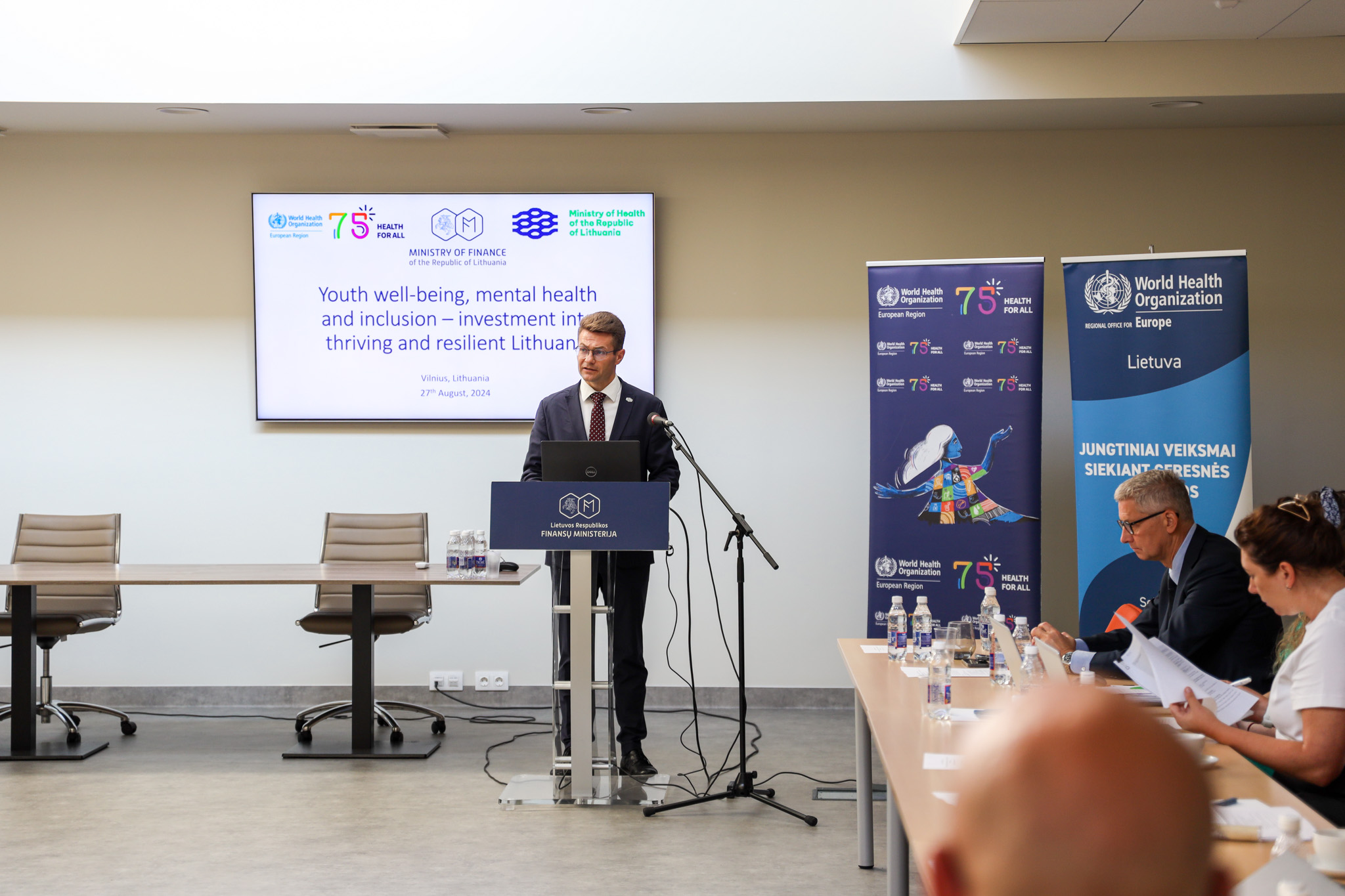
After a round table discussion, bilateral consultations with individual Lithuanian institutions and bodies are scheduled for 28 August. Opportunities to improve the mental health and inclusion of young people through cross-sectoral efforts are at the heart of the debate. Possibilities to launch an innovative pilot project in Lithuania to simulate investments in the promotion of a healthier society will also be discussed.
The mission is a follow-up to the WHO Economy of Wellbeing Economy Initiative meetings in July and April 2023.
Last updated: 16-09-2024