

G. Skaistė: “After the economy weathered recent shocks, it is vital to further strengthen resilience and competitiveness”
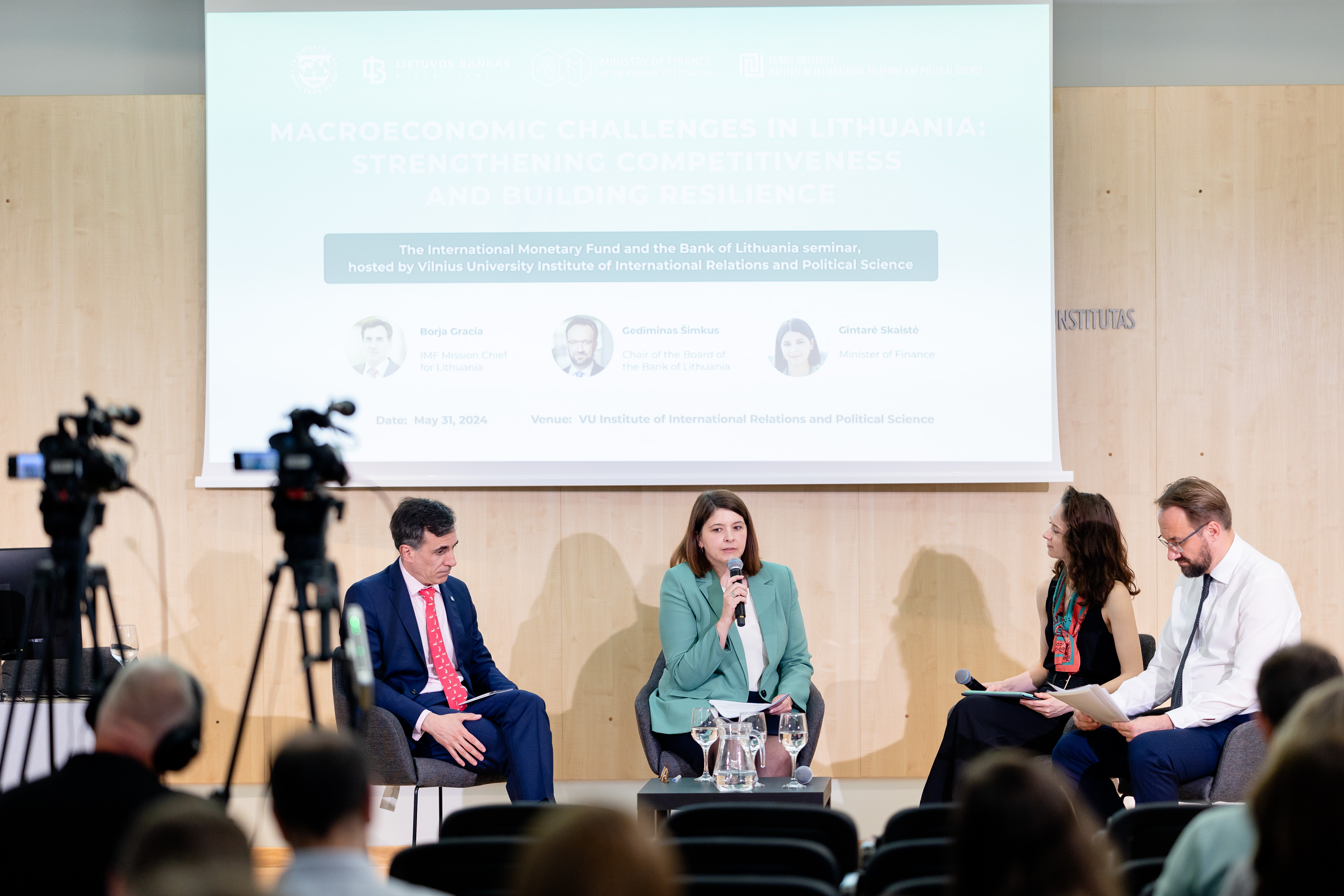
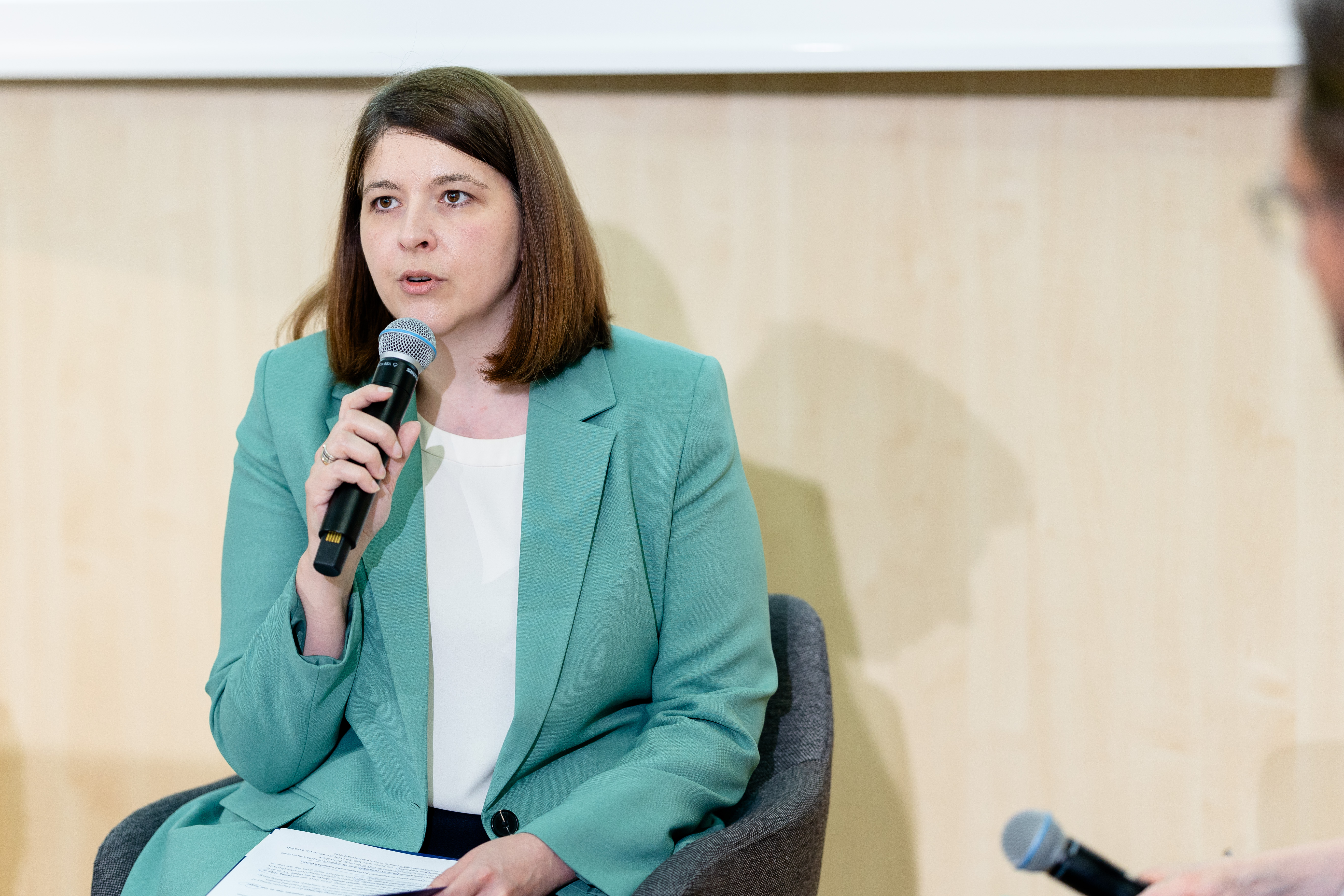
The reorientation of Lithuania’s business from the Eastern to the Western markets even before the eruption of the war in Ukraine allowed reducing a negative impact of the war on the national economy. Lithuania’s economy also withstood the energy price shock which caused a surge in inflation. Moreover, the decisions currently being implemented will strengthen the country’s resilience to possible future shocks: large-scale investments are made in business competitiveness and productivity increase. These were the topics addressed by Minister of Finance Gintarė Skaistė during a discussion organised by the International Monetary Fund (IMF) and the Bank of Lithuaniaon Friday.
“After the annexation of Crimea, Lithuania’s business has strategically turned to the Western markets, reducing its ties with the Eastern markets. Such a reorientation has significantly contributed to Lithuania’s successful resilience to the current shocks. However, the surge in energy prices within the context of the war has seriously affected Lithuania – therefore, we made conclusions and took strategic decisions. We have an ambitious goal of producing all the electricity consumed from renewable energy sources by 2027 and becoming an electricity exporting country in the future. These decisions will help strengthen the resilience of Lithuania’s economy and enhance its competitiveness”, stresses Minister of Finance G. Skaistė.
Exports of products of the Lithuanian origin to russia and Belarus have been consistently declining before the war. In 2013 exports to russia represented approximately 5 % of total exports of the Lithuanian origin, while before the war this percentage was already lower than 2 % (in case of Belarus, exports decreased from 1.5 % to 0.5 %over the same period). In 2023 exports of the Lithuanian origin to russia and Belarus represented barely 0.33 and 0.27 %, accordingly, from total exports. According to the data for 2023, the main trading partners of Lithuania are European Union (EU) countries (66 %), USA – 7 % and the United Kingdom – 5 %.
The resilience of Lithuania’s economy has been also positively affected by a long-term energy diversification strategy. The liquefied natural gas terminal and electricity links with Poland and Sweden enabled Lithuania to be the first European country which, after the eruption of the war, has completely seized from buying energy resources from russia.
The discussion on economic competitiveness highlighted that despite a strong nominal growth of wages over the past few years, Lithuania’s business, in particular, the export-oriented manufacturing sector, managed not only to maintain but even to increase productivity. The competitiveness of Lithuania’s business in international markets is reflected by steadily increasing export market share in the European Union over the past decade.
However, in order to maintain economic competitiveness in the future to secure further rapid growth of wages, investments in productivity enhancement are necessary. For this reason, Lithuania gives focus on channelling the EU funds, including the Recovery and Resilience Facility (RRF), to digitalisation, innovation, energy security and green economy. The financial instrument “Billion for Business”, promoting transformation of national economy towards a more sustainable, innovative and high value-added economy, launched by the national development company Investment and Business Guarantees (INVEGA) in April serves a concrete example of this. In order to enhance the country’s competitiveness, a focus is also given on promotion of innovation, R&D and strengthening the human capital.
On Friday, the international seminar organised by the IMF and the Bank of Lithuania focused on macroeconomic challenges in Lithuania, i.e. strengthening competitiveness and resilience. The seminar covered a panel discussion on the competitiveness of the Lithuanian economy with the participation of Minister of Finance G. Skaistė, Chairman of the Board of the Bank of Lithuania Gediminas Šimkus and Head of the IMF mission in Lithuania Borja Gracia.
Last updated: 03-06-2024