

G. Skaistė "Application of Sanctions Is a Marathon, Not a Sprint"
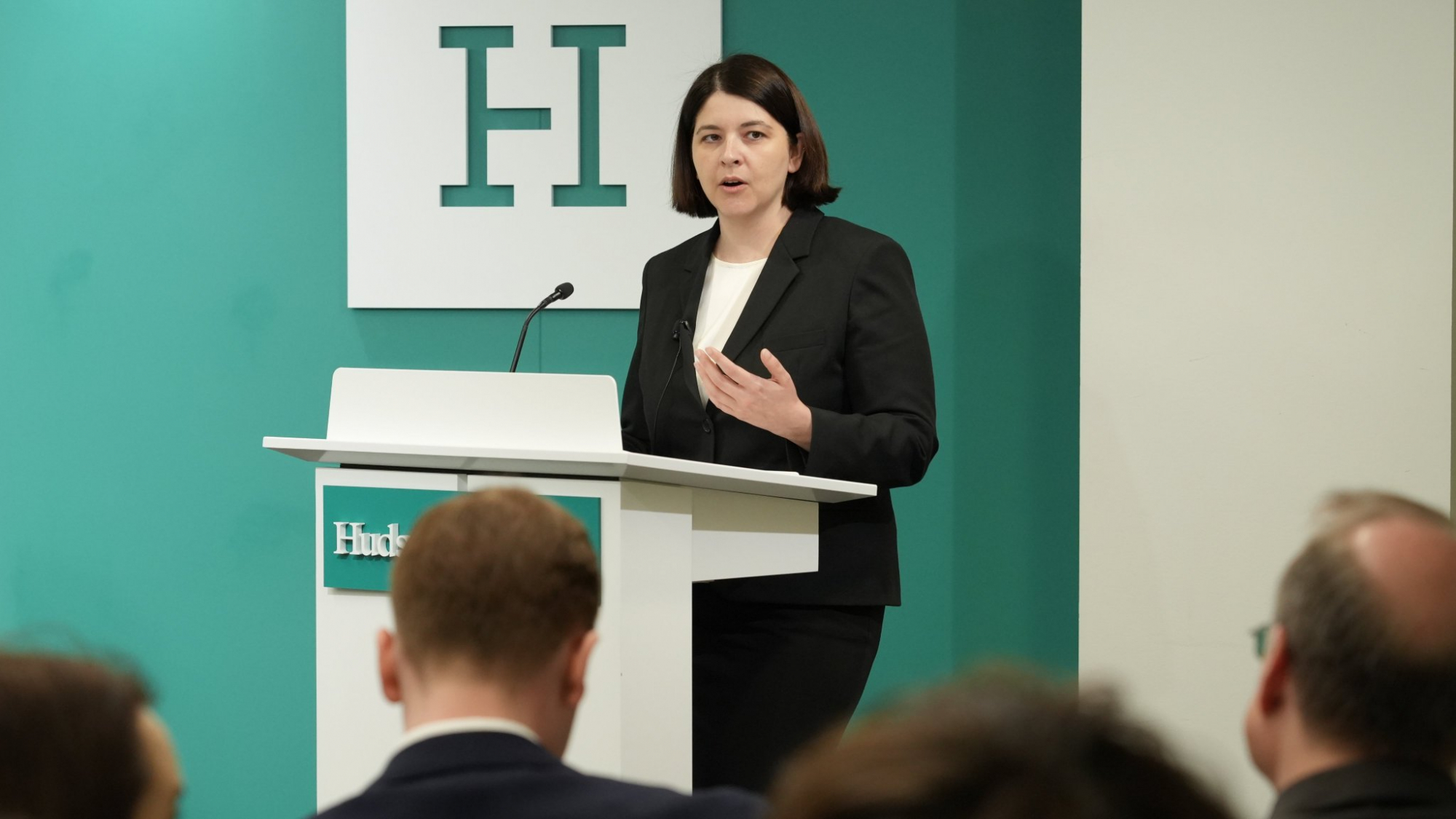
Minister of Finance Gintarė Skaistė, while making a presentation and participating in a discussion at the Washington-based Hudson Institute event "Constraining Russia's War Economy: Lessons from Lithuania", emphasized that despite the false narrative spread by russia, Western sanctions work and have significant adverse effects on the economy of the aggressor. According to the Minister, it is important to remember that the application of sanctions is equivalent to a marathon, not a sprint – over time the constrains will put more and more pressure on the russian economy and public finances.
"We often hear the myth spread by the Kremlin that international sanctions do not affect russia and are more harmful to the West. We must understand that this is part of the information war against our societies. The data shows that the sanctions are having a significant impact on the russian economy and public finances, although the negative impact is perhaps slower than many would like. We must understand that the application of sanctions is more like a marathon than a sprint – their effect increases over time, every day the aggressor is bitten more and more painfully. In the medium and longer term, the impact of sanctions will only intensify, it will limit the growth potential of the economy and the regime's ability to finance the war,” noted Minister of Finance G. Skaistė. "At the same time, we must not forget that the negative effects on the European and world economy do not come from Western sanctions, but from russia's war and manipulation of energy resources."
At the event, the Minister also emphasized that it is necessary to continue not only to strengthen sanctions, but also to take care of the effectiveness of their implementation, preventing possible risks of circumventing them.
"We must continue to expand sanctions and prevent their possible circumvention. It is important to focus on russia's main sources of income, primarily the energy sector. It is also necessary to expand sectoral sanctions and include russian banks and financial institutions that have not been sanctioned so far into the sanctions regime. Sanctions will only be partially effective if russia finds ways to circumvent them. Therefore, it is necessary to pay special attention to the risks of circumventing sanctions through third countries, using all leverage available to Western countries, including economic and financial, for this purpose," noted G. Skaistė.
In the discussion, the Minister of Finance also emphasized the need to use frozen russian assets for the reconstruction of Ukraine, which could cover a significant part of the reconstruction need, which, according to the World Bank, amounts to USD 411 billion. It is estimated that russian assets frozen in Western countries amount to about USD 300 billion of central bank reserves and another USD 50 billion of oligarchs' funds.
The Hudson Institute is a conservative research organisation based in Washington that focuses on issues related to national security, foreign policy, economy, and domestic policy.
Last updated: 18-04-2023