

IMF: Lithuania’s economy is showing resilience against the backdrop of the energy price shock, but it is necessary to address challenges in the labour market and encourage investment in innovation and technology
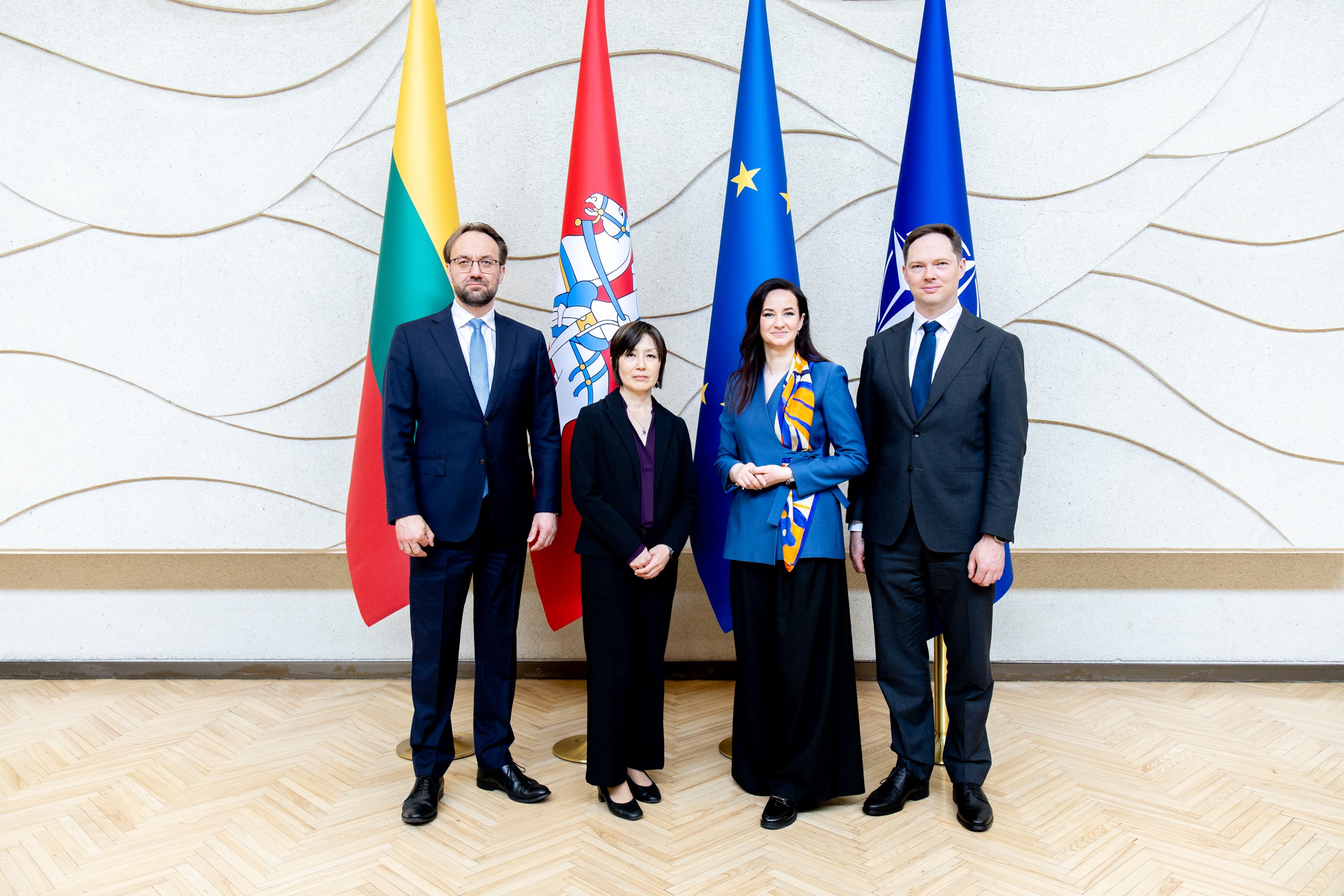
After analysing the Lithuanian economy for two weeks, experts from the International Monetary Fund (IMF) presented their conclusions stating that the country’s economy has maintained stable growth against the backdrop of recurring global shocks. This year, economic growth will be supported by strong domestic demand and rapid wage dynamics, the fiscal policy expansion, the withdrawal of second-pillar pension funds and EU-financed investments. Inflation will accelerate due to the increase in energy prices caused by the conflict in the Middle East.
The IMF emphasises that some of the factors currently supporting economic growth are temporary, and it is therefore necessary to strengthen long-term sources of growth through productivity-enhancing reforms. The IMF recommends improving the labour market’s adaptability to structural changes, ensuring smoother access to finance for businesses, promoting investment in technology and its application in day-to-day business operations, and further strengthening energy resilience. Given the ageing population and the growing need for social and national defence expenditure, the IMF emphasises the need for ensuring the sustainability of public finances. It recommends increasing budget revenues, reviewing the cost structure and striving for more efficient use thereof, which would help stabilise public indebtedness.
“Despite the economic pressure caused by the conflict in the Middle East, we see that Lithuania’s economy remains strong and capable of withstanding external shocks. Our task is to turn this resilience into a long-term advantage by boosting investment, enhancing productivity and ensuring sustainable public finances. Although the situation is currently quite positive and stable, looking ahead we understand that with the growing needs for defence spending and the challenges of an ageing population, structural and consistent solutions will be needed to keep the Lithuanian economy on the path of sustainable growth,” says Minister for Finance Kristupas Vaitiekūnas.
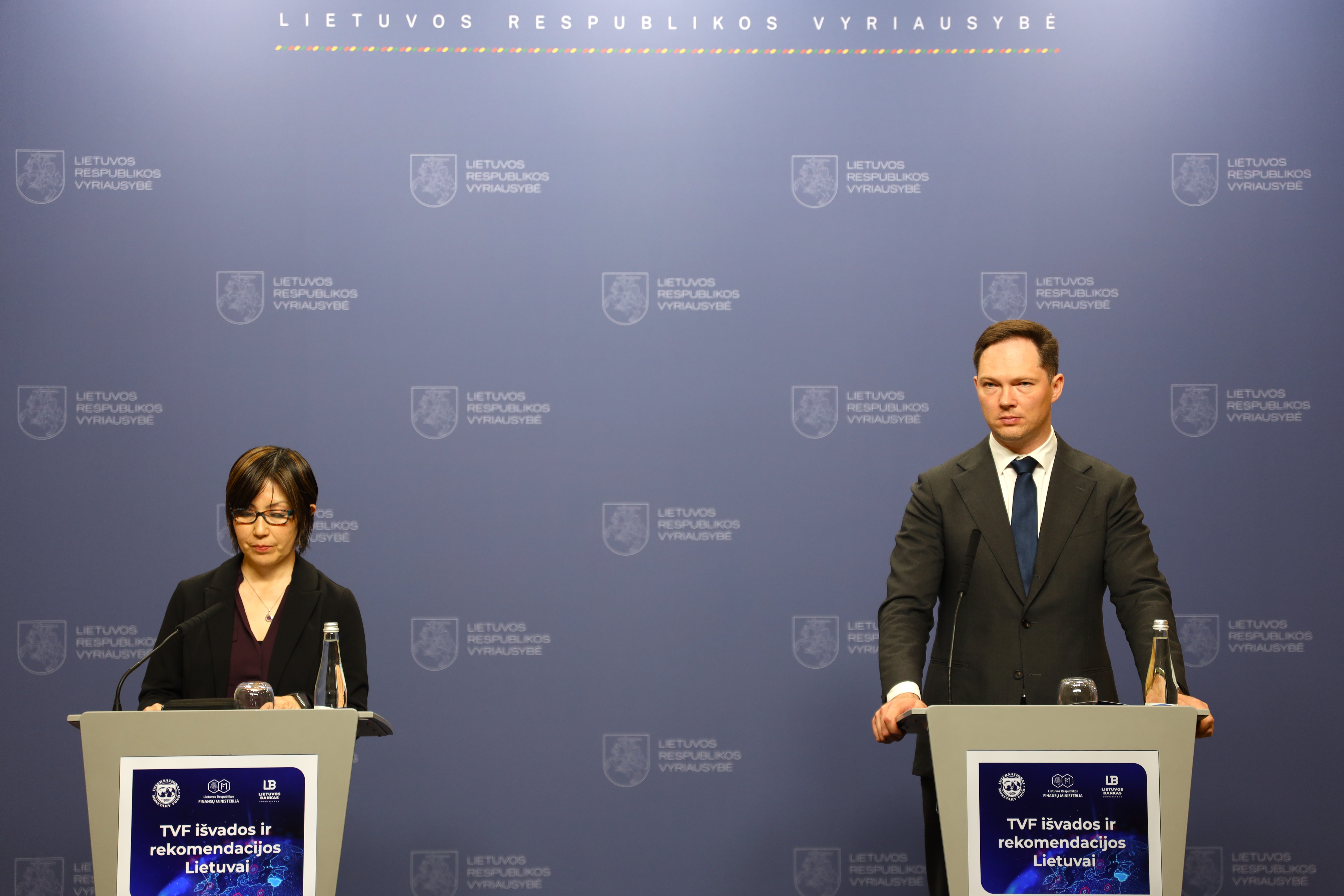
“We appreciate the insights and recommendations of the International Monetary Fund for Lithuania, which are important for continuing to maintain our economic resilience in a challenging geopolitical environment. Like any open economy, we are not insulated from external turbulence and the surge in energy prices, and in response to security threats in the region, we have significantly increased funding for national defence. All of these are significant and sensitive factors from a public finance perspective, but the Government is only pursuing sustainable solutions focusing on breakthroughs in areas that generate economic return, such as the defence industry. At the same time, sustainable public finances are a pre-requisite for achieving this Government’s priority objectives strengthening social protection and reducing social exclusion, ensuring the quality of public services, and strengthening of defence and security. Therefore, all decisions will continue to be responsible, balanced and focused on the country’s long-term benefits,” says Prime Minister Inga Ruginienė.
“The projected growth of the Lithuanian economy this year will continue to be solid and one of the fastest in the region, but the current energy price shock may pose challenges to the development of the economy. It is therefore important to invest more in innovation and technology, especially for exporters, thereby maintaining competitiveness through high-quality products and services. The role of policymakers in enabling investment is also important here, as we must continue to improve firms’ access to finance and expand the financial and capital markets,” says Gediminas Šimkus, Chairman of the Board of Lietuvos bankas.
In 2025, Lithuania’s economy grew by 2.9%, mainly due to domestic demand, wage and pension growth, higher government spending and more favourable financing conditions. Based on the main forecast scenario, the IMF predicts that economic growth should also reach 2.9% in 2026.
In 2025, prices rose by 3.4% while this year the IMF forecasts an acceleration to 5.2%, mainly due to higher energy prices, tax adjustments and strong domestic demand, but inflation is expected to normalise in the medium term.
The economic outlook is prone to risks and a high degree of uncertainty. According to the Fund, economic growth may be slower while prices may be rising faster if geopolitical tensions and potential trade disruptions drive energy prices up, supply chains are disrupted and external demand is weakened. Domestic factors, such as larger than expected withdrawals of funds from the second pension pillar, may stimulate demand and further contribute to price increases.
The IMF highlights structural challenges in the labour market stating that even though wages are rising rapidly and the vacancy rate remains high, the unemployment rate is still elevated, especially in the regions. This situation is mainly due to the ageing of the population and the mismatch between skills and labour market needs. The IMF therefore recommends enhancing education, vocational training and retraining measures as well as adjusting the unemployment benefit model by increasing incentives to stay in the labour market. It is also important to ensure timely and efficient processing of work permit applications for foreign workers alongside stronger migrant integration. Easing mobility frictions - through improved connectivity, greater supply and quality of affordable dwellings in major cities - would further support employment and productivity.
In the area of public finances, the IMF notes that in 2025 the deficit increased to 1.8% GDP while the public debt rose to almost 40% GDP. According to the IMF’s baseline scenario, public debt will continue to rise and in 2030 will reach 55% GDP due to higher defence, social and ageing-related expenditure.
In order to stabilise the growth of public debt, the IMF recommends covering higher long-term expenditure with sustainable measures of additional tax revenue and a more targeted revision of spending priorities. According to the Fund, tax revenues in Lithuania remains relatively lower than in many European countries, with limited possibilities for significantly reducing expenditure without compromising the quality of essential public services. Therefore, strengthening fiscal sustainability should primarily be based on long-term revenue measures broadening the real property tax base and increasing the tax rates, making the personal income tax system more progressive, limiting exemptions in corporate income tax and excise duties, and reducing the value added tax compliance gap. On the expenditure side, the IMF recommends curbing public wage bill growth, targeting social benefits more effectively and optimising spending in health and education sectors.
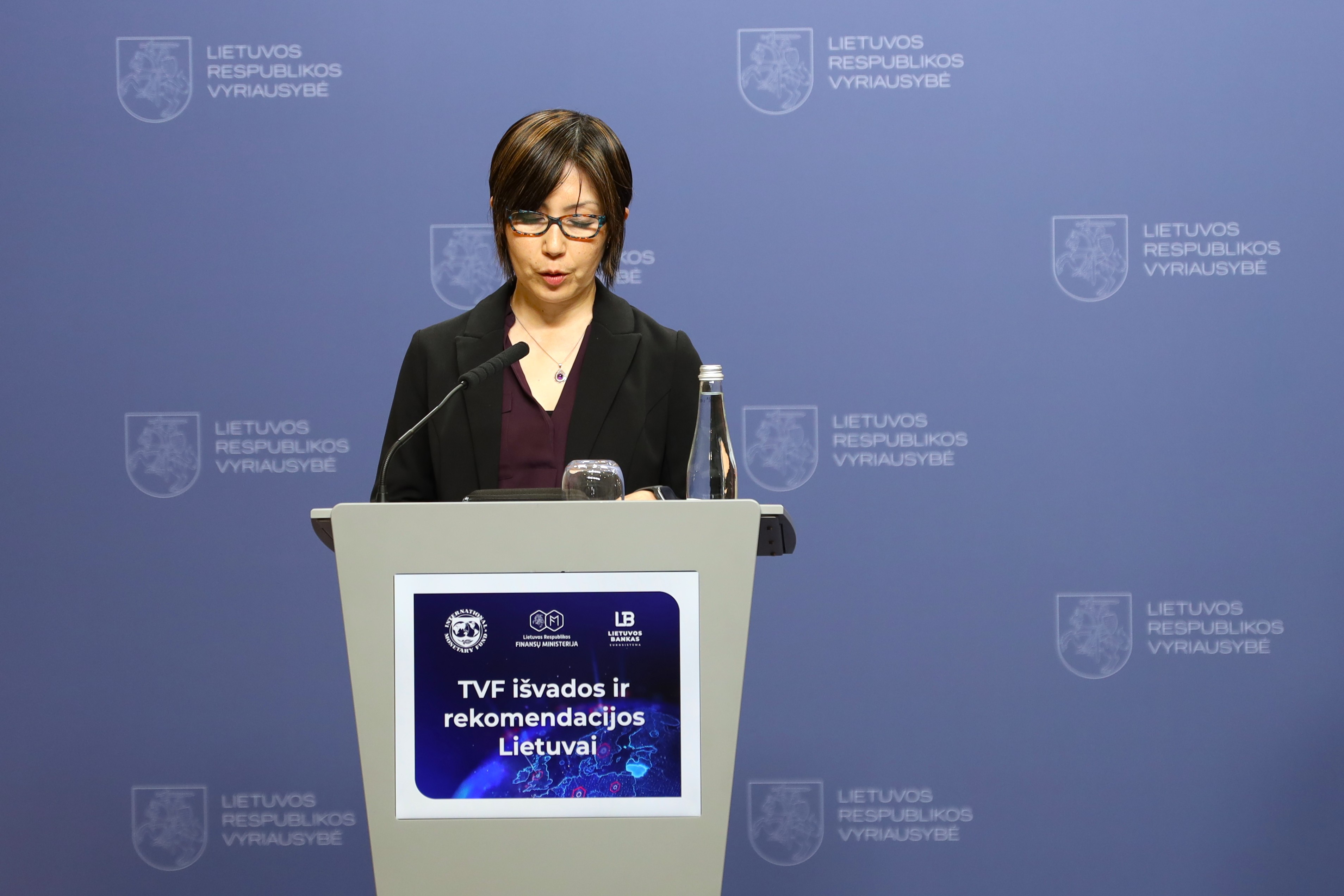
The IMF also stresses the need to strengthen the pension system in order to ensure the long-term fiscal sustainability and adequate income for the population in old age. According to the Fund, the ageing of the population will significantly drive public spending on pensions up, while the recent changes allowing voluntary participation, early withdrawals, and contribution breaks weaken replacement rates and exert more pressure on public finances in the future. According to the IMF, it is important to preserve Sodra reserves for the future and to maintain state contributions for those saving for their retirement within the second pension pillar. That said, in the long run a more comprehensive assessment of the pension system is needed, including measures to reinforce the second pension pillar and to bring the Lithuanian pension system closer to the best European practices.
The IMF notes that Lithuania’s financial system remains stable and the banking sector is well capitalised, liquid and profitable. Accelerating lending to businesses and households is contributing to an active housing market. Financial expansion is contributing to the increase in cyclical risks, but systemic risks are contained as the country’s indebtedness is low, the quality of borrowers’ assets is high, and banks have large capital and liquidity reserves. According to the Fund, if credit and house price growth accelerate further, macroprudential policies should respond to potential risks to financial stability, for example through an increase in the countercyclical buffer rate.
The IMF emphasises that faster productivity growth requires improving business access to a wider range of financing sources and expanding technological diffusion. According to the Fund, limited access to finance restricts businesses’ ability to scale up and invest in digitalisation, artificial intelligence and other technological upgrades. It is therefore important to further develop non-bank financing channels, deepen the domestic and EU capital markets, expand alternative sources of financing (venture capital, crowdfunding), and continue to make effective use of the financing provided by the national promotional bank ILTE as well as EU-funded instruments. The IMF also notes that greater energy resilience driven by additional renewables supply and storage, as well as grid modernization and expansion, would reduce the vulnerability of businesses to external energy price shocks and support Lithuania’s competitiveness.
You can read more about the IMF report here.
Lithuania has been a member of the IMF since 1992. 191 countries are currently members of the IMF. Annual national consultations with the IMF are organised in accordance with Article IV of the IMF’s Articles of Agreement, which obligates the IMF member states to pursue economic and financial policies that ensure domestic and global financial and economic stability.
Last updated: 26-05-2026