

K. Vaitiekūnas will attend ECOFIN meetings in Brussels: focus on Ukraine and the election of the Vice-President of the ECB
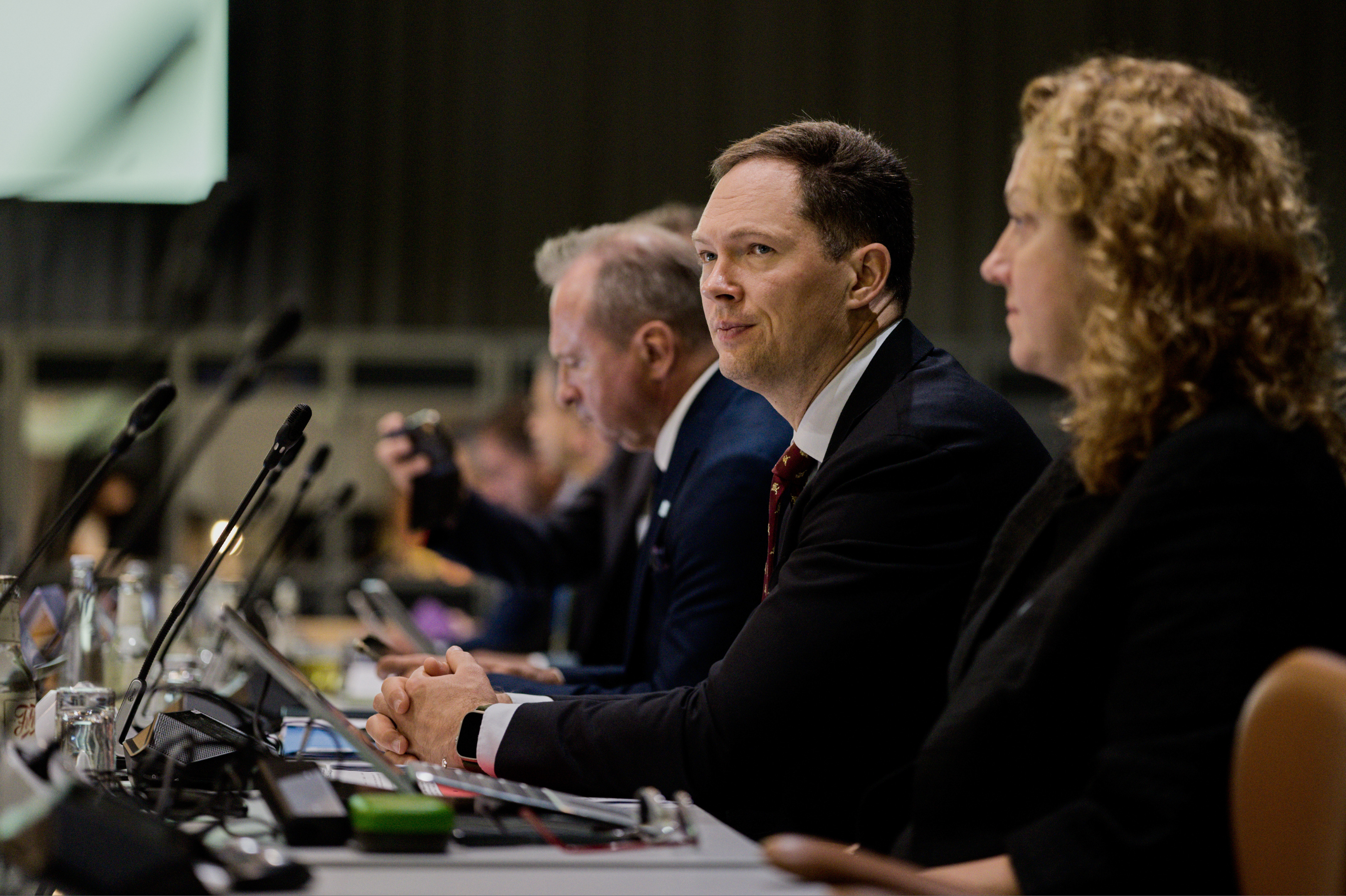
The meetings of the Eurogroup (EG) and the Council of Economic and Financial Affairs Ministers (ECOFIN) of the European Union (EU) in Brussels on 19-20 January will focus on funding to Ukraine. The meetings are also expected to address the issue of the position of the Vice-President of the European Central Bank (ECB). Lithuania has nominated former Minister of Finance Rimantas Šadžius for this position.
"I have no doubt that the long-standing experience of Rimantas Šadžius would help one of the most important financial institutions in the EU to effectively manage the euro and formulate and conduct the EU's economic and monetary policy. Moreover, the position of the representative of the new EU member on the board would also help to maintain the necessary geographical balance," Minister of Finance Kristupas Vaitiekūnas stated.
An informal vote on the nominations submitted is scheduled for the Eurogroup meeting on 19 January and, if an agreement is reached, a decision on a recommendation to the European Council on the selected candidate is expected to be taken in the margins of the ECOFIN Council (20 January). Estonia, Croatia, Latvia, Portugal and Finland also submitted nominations for the position of the Vice-President of the ECB.
At the Eurogroup meeting, finance ministers will receive an update on the euro adoption in Bulgaria and the euro area recommendations for 2026, as well as information from the G7 meeting in Washington on 12 January.
Cyprus took over the EU Council Presidency from 1 January, so the ECOFIN meeting will start with the presentation of the Presidency's work programme. Minister of Finance Kristupas Vaitiekūnas hopes that Cyprus, which takes over the EU Council Presidency, will meet its ambitious goals.
"We support continuing discussions on the economic and financial impact of Russia's aggression against Ukraine and reaching a swift agreement on additional financial support for Ukraine. We believe that the legislative work on the Savings and Investments Union (SUI) will continue to be accelerated during the Cyprus Presidency, actively addressing the issues of taxation and the creation of a modernised customs union," K. Vaitiekūnas noted.
At the ECOFIN meeting, finance ministers will exchange views on the economic and financial impact of Russia’s aggression against Ukraine and the necessary financial support for Ukraine. At the end of 2025, the European Council (EC) failed to reach an agreement on the use of EUR 210 billion of Russia’s frozen assets for the Ukraine Reparations Loan, but an agreement was reached on a EUR 90 billion loan for Ukraine for the period 2026-2027, financed by the EC borrowing on capital markets and covered by an EU budget guarantee. It is expected that the necessary decisions on the disbursement of the loan will be implemented as soon as possible.
“Given Ukraine’s funding gap for the next two years, we need to take decisions on further financial and military support for Ukraine as soon as possible. We thank the European Commission for the legal proposals already made for a EUR 90 billion loan to Ukraine and look forward to swift progress in their approval, as additional funding will be needed for Ukraine already by the end of the first quarter of this year. It is also necessary to ensure sufficient flexibility in the use of funds, taking into account Ukraine's budgetary and military needs," K. Vaitiekūnas stated.
Last week, Lithuania joined a political statement by a group of Ukrainian supporters providing the International Monetary Fund (IMF) with financial assurances for fulfilment of Ukraine’s commitments to the International Monetary Fund (IMF) in the future. This is a prerequisite for the IMF to approve a new financing programme for Ukraine of USD 8.1 billion in the near future.
The ECOFIN meeting will also approve the modified RRF plans of 6 Member States (Germany, Ireland, the Netherlands, Sweden, Finland, Spain), the conclusions of the European Semester on the Alert Mechanism Report 2026 and the Council decisions and recommendations under the Excessive Deficit Procedure.
Last updated: 18-01-2026
Related news:
Fitch Ratings endorsed the credit rating previously granted to Lithuania
Moody’s Investment Service assessed Lithuania‘s economic outlook