

Minister G. Skaistė: “The success of the Baltic states depends directly on targeted, fast and effective Cohesion Policy decisions”
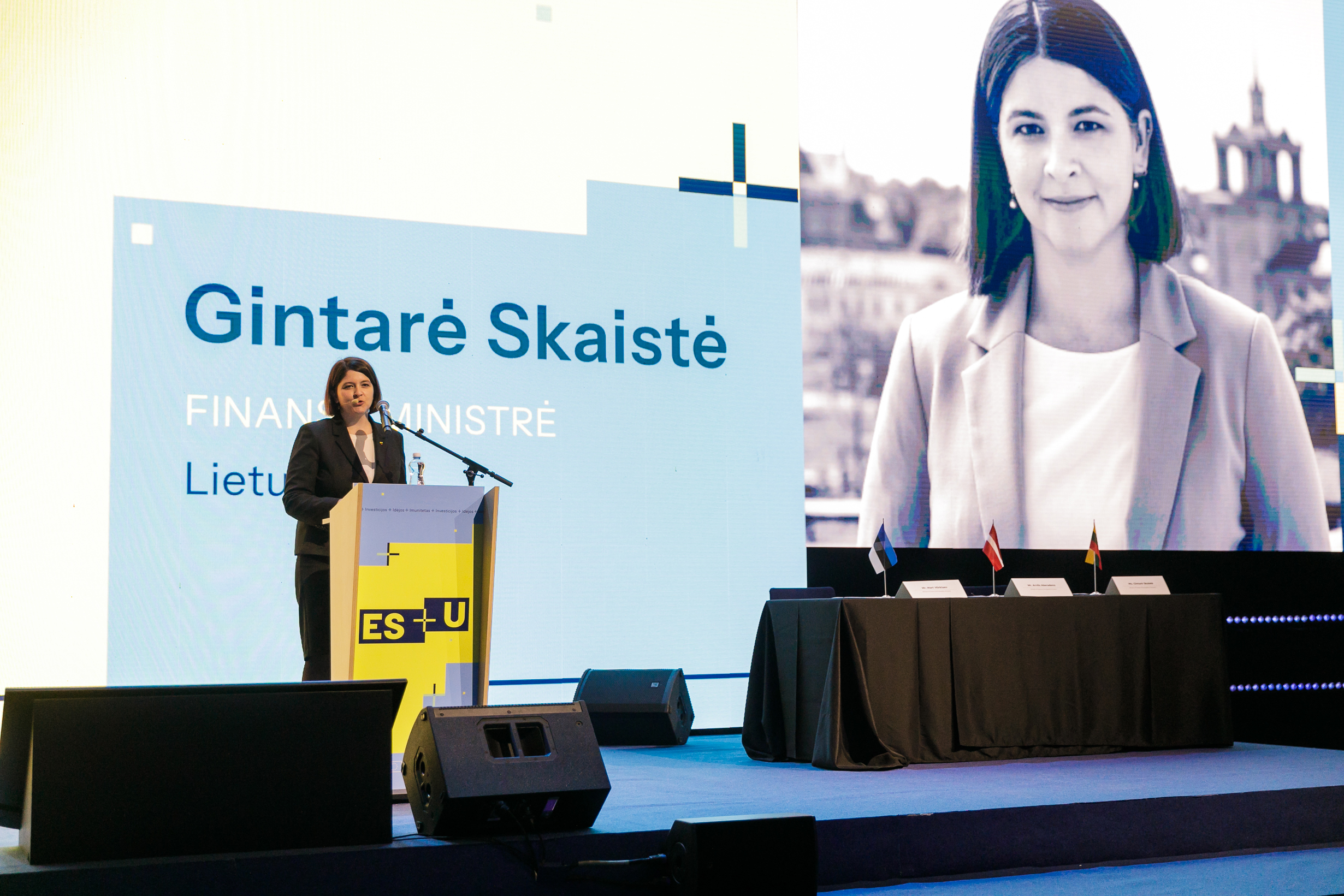
“Green transformation, digitalisation and education are three key axes of success for Lithuania and the entire Baltic region, ensuring not only economic growth, but also resilience to external threats,” stressed Minister of Finance Gintarė Skaistė at today’s international conference on European Union (EU) investments in the Baltic region and the future of Cohesion Policy taking place in Vilnius.
“When we talk about the green transformation, we should consider not only environmental objectives, but also energy security issues, the importance of which has become particularly evident when russia erupted the war against Ukraine. We are a market dependent on external factors, therefore we need to speed up implementation of our plans to become an independent energy island in the region. Digitalisation and innovation are needed not only to achieve the opportunities offered by digitalisation, but also to attract investments in the region through new accessible formats. Finally, the core of the change is education. Not only the quality of education, but also more effective learning of new skills, synergies between research and business", said Minister G. Skaistė in a joint panel discussion between the Ministers of Finance of the three Baltic states and the European Commission.
A Joint Statement by Lithuania, Latvia and Estonia on the future of Cohesion Policy was also signed during the event.
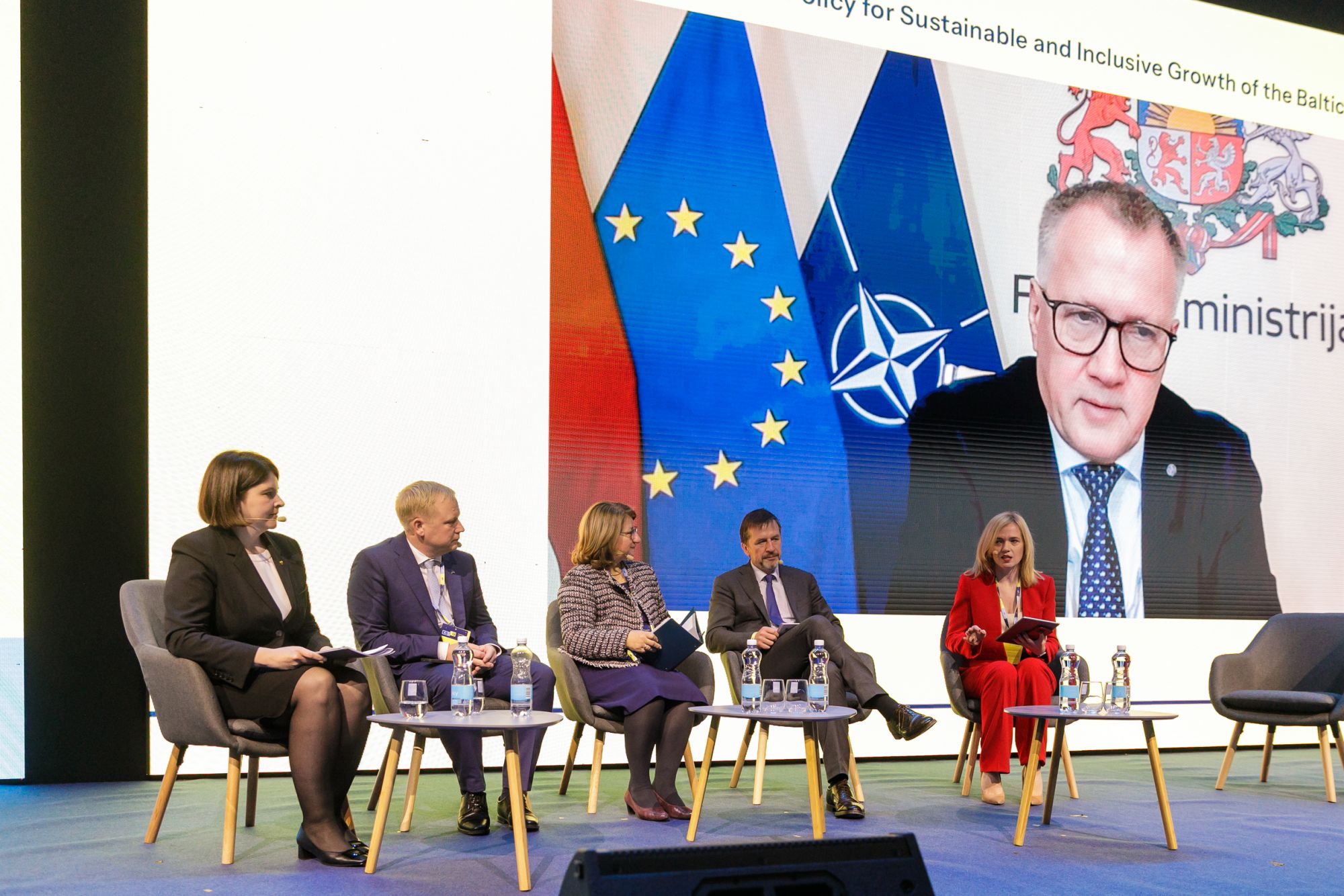
“Cohesion Policy is one of the most important investment instruments at EU level for long-term objectives. Lithuania is still among the leading countries, investing the Cohesion Policy funds efficiently – we do not intend to slow down the pace also in the future. However, when we think about the future, we should understand that the flexibility and efficiency of instruments is the key to a successful, secure and progressive European Union. Still remaining differences in the level of development of the countries program certain barriers to investments and economic growth. Moreover, the geographical situation creates uncertainty and additional challenges that other countries do not necessarily face. Especially in the context of the russian war, we feel greater uncertainty and are more easily affected. Therefore, the accuracy, speed of the Cohesion Policy instruments and adaptability to the needs of the countries would create an additional stimulus for changes”, said Minister G. Skaistė.
In addition to security and geographical aspects, the Joint Statement signed by the Ministers of Finance of the Baltic states emphasises that further enlargement of the European Union should be further assessed in the development of the Cohesion Policy Strategy for 2027.
“For Lithuania, Latvia and Estonia – the countries at the EU border and at the forefront of democracy security – to have a safe neighbourhood and to see Ukraine as an equal member of the EU is a strategically important step. This is a higher good than just being beneficiaries of Cohesion Policy or European investments in the coming period,” she the Minister.
Finally, the Statement refers to the need for financial instruments to be applied accurately, so that they reach the countries concerned in due time. Continuous simplification of Cohesion Policy and cooperation rules and acceleration of processes would reduce the administrative burden and guarantee the effectiveness of measures, which will remain particularly relevant in the future.
Last updated: 04-12-2023