

Ministry of Finance: Action Plan on Narrowing of the Shadow Economy and VAT Gap implemented, only follow-up measures are ongoing
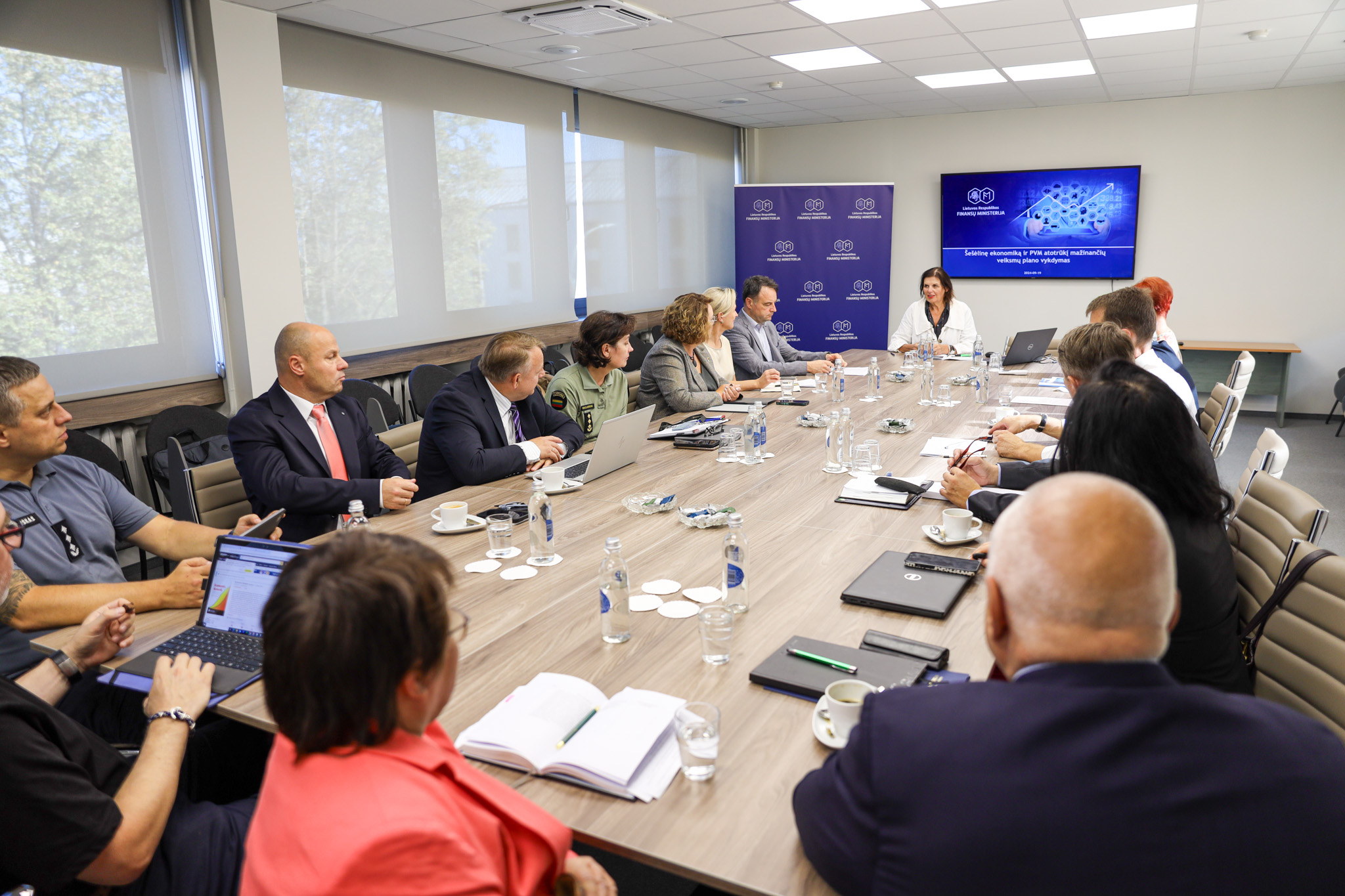
After the Ministry of Finance implemented the measures of the Action Plan on Narrowing of the Shadow Economy and Value Added Tax Gap approved already in 2021, Vice-Minister of Finance Rūta Bilkštytė notes that not only the VAT gap has been narrowed in the country, which will continue its downward trend in the coming years, but also the fight against shadow economy has resulted in over EUR 600 million more in VAT, and another EUR 238 million due to the direct impact of the measures of the plan.
“Not only have we implemented almost 100 % of the planned measures, while maintaining the implementation of the follow-up measures, but we clearly see that, with the shadow economy indicators unchanged, we would not have collected over EUR 600 million between 2021 and 2022. In addition, we raised over EUR 238 million in 2023 alone, thanks to the direct implementation of the measures of our plan. These results prove that our plan to narrow the shadow economy and the VAT gap has been successful,” Vice-Minister R. Bilkštytė said at the meeting of the Commission for the Coordination of the Reduction of the Shadow Economy.
A meeting of the Commission for the Coordination of the Reduction of the Shadow Economy also highlighted VAT gap decreasing trends.
According to the latest study published by the European Commission's Centre for Social and Economic Research (CASE) on the VAT gap in EU countries, Lithuania has seen a downward trend in the VAT gap every year over the last decade. In 2021, the VAT gap stood at 14.5% and decreased by 4.2 percentage points compared to 2020. According to the CASE assessment, this is the largest decrease over the whole calculation period. According to the CASE preliminary estimates, the VAT gap decreased even more significantly in 2022, to 13.5%, or by 5.2 percentage points compared to 2020.
According to preliminary data compiled by the State Tax Inspectorate (STI), the trend of narrowing the VAT gap in Lithuania will continue. The trends reported by the STI in February are broadly in line with the CASE estimates, with a projected VAT gap of 13% in 2022, 12.2% in 2023, and 11% in 2024.
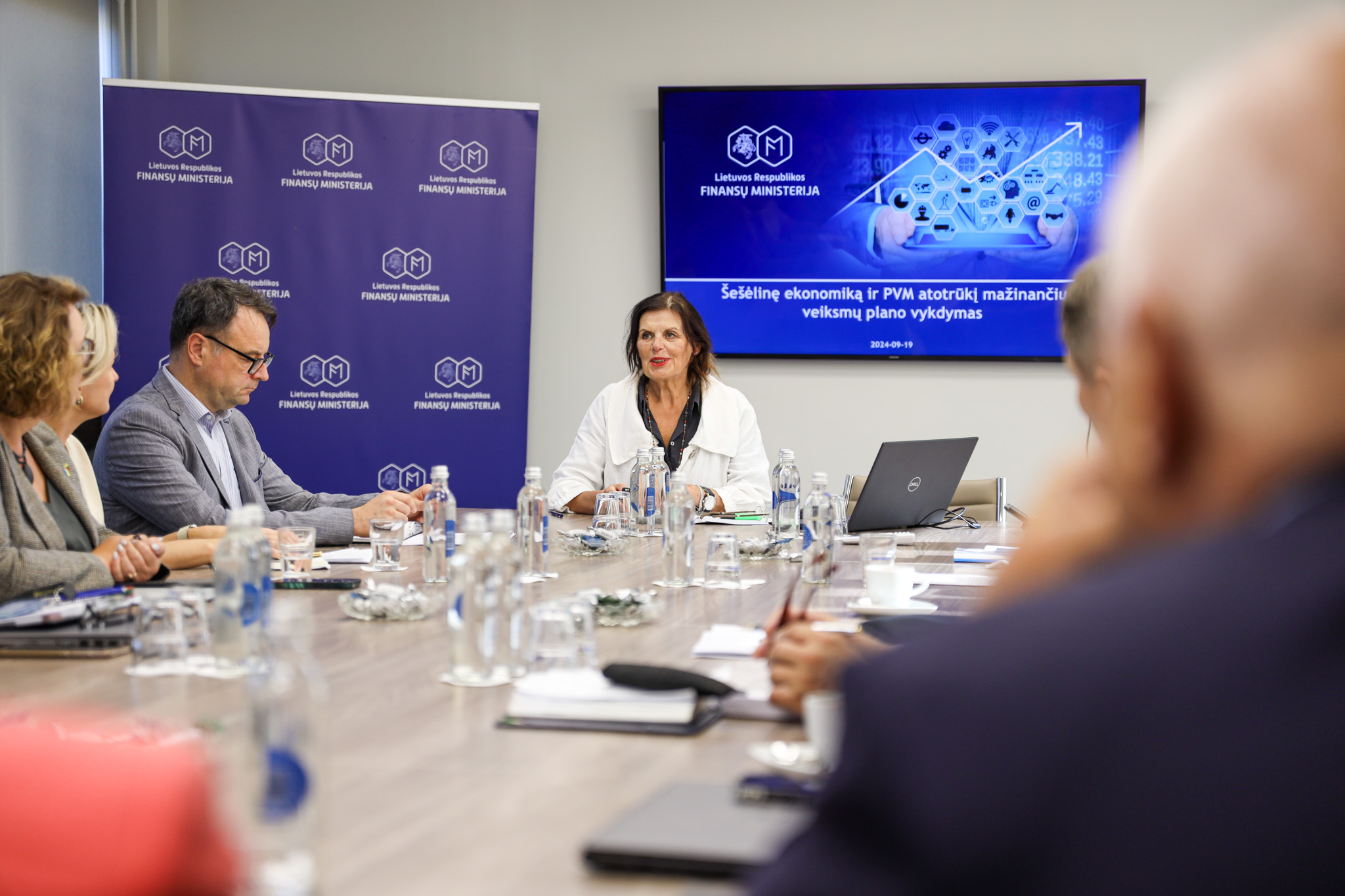
According to the Vice-Minister, out of the 37 measures of the Action Plan on Narrowing of the Shadow Economy and VAT Gap implemented together with other institutions of the country still 12 follow-up measures are under implementation, finalisation of which was scheduled still at the moment of drawing up of the plan to be by the end of 2026.
Plan measures implemented
The measures of the Action Plan on Narrowing of the Shadow Economy and Value Added Tax Gap implemented during this term of office cover two main categories: measures to prevent violations and measures to encourage voluntary payment of taxes.
The implemented measures to prevent violations include promotion of non-cash settlements; prevention of meeting private needs at the expense of companies; increased control possibilities for the STI in order to prevent violations; strengthening the responsibility for financial reporting; more precise information requirements for those working in the construction sector and for developers; prevention of illegal work by introducing a transparent identification code for workers on construction sites; introduction of the possibility of withdrawing the unemployed status in case of illegal income; reducing the bureaucratic burden on posted workers; revision of the applicable fines for violations; requirements for taxi drivers to use cash registers or printers.
The possibility for the STI to obtain data from digital trading and service platforms was also implemented; the establishment of a model for the supervision of persons in possession of high-value assets; advanced measures were put in place to control the EU’s external border and prevent violations, namely, the installation of one of the most modern train X-ray control systems in Europe at the Kena customs railway post in Lithuania; a freight transport information system preventing the licensing of technically defective freight vehicles was modernised.
Measures implemented in relation to the promotion of voluntary tax payment include reducing the administrative burden for the self-employed by declaring income to the STI and Sodra as a one-stop-shop; improving the quality of services provided by the STI to small and medium-sized businesses; installation of electronic cash register system and receipt of information; strengthening interinstitutional cooperation.
Follow-up measures of the plan continue to be implemented
A further 12 ongoing follow-up measures to the Action Plan on the Shadow Economy and the VAT Gap cover the same two main categories: preventive measures to prevent infringements and measures to encourage voluntary payment of taxes.
Preventive measures to prevent infringements are carried out: the creation of a simplified value added tax (VAT) and personal income tax (PIT) declaration system, but also their assessment at the moment of submission; robotization of STI processes for repetitive technical actions; strengthening of data analysis and competencies of the STI and the Customs staff; strengthening of data sharing of the Smart Tax Administration System (i.MAS) with SIS and FCIS; the Customs shall be provided with the necessary control equipment; research on the consumption of non-accounted alcohol and tobacco products is intended to be carried out every three years from 2025 onwards.
To promote the voluntary payment of taxes, a model of services provided by the STI and customer service is currently being developed based on customer segments; it is planned to create links between information systems and the movement of electronic accounts between private and public entities; introduce electronic services that make it as easy as possible for taxpayers to calculate and pay taxes; to create an ecosystem of electronic goods purchase-sale and transport documents; create a risk management profile accessible to taxpayers within the STI system; develop a comprehensive public education programme and its implementation plan to reduce the tolerability of the shadow economy in society.
Last updated: 25-09-2024