

Lithuania and Poland strengthen cooperation on capital markets – a path to a safer and more competitive Europe
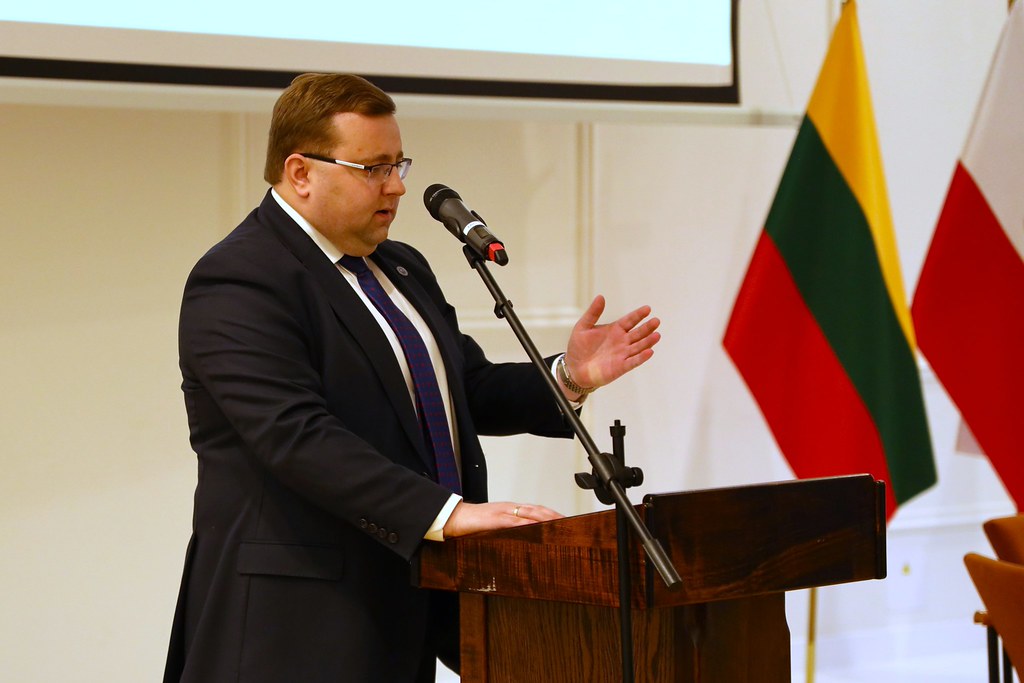
The partnership between Lithuania and Poland is expanding into a new field – the development of capital markets, and closer cooperation between the two countries can create significant added value for the entire region. This was underlined by Vice-Minister of Finance Januš Kizenevič, who participated in the conference in Vilnius on the role of capital markets in promoting economic growth, innovation and increasing European competitiveness.
"Lithuania and Poland are already successfully working together in the areas of security, energy and infrastructure, and stronger capital markets can become another example of joint success. Russia’s war against Ukraine has shown that much more investment in defence and security is necessary, and to strengthen defence capabilities and develop advanced technologies, State budgets alone will not be enough, and a lot of private capital will also need to be raised. As a result, developed capital markets are becoming not only a matter of economic growth, but also of the security and resilience of Europe as a whole," J. Kizenevič says.
According to him, the goal of the Lithuanian and Polish capital markets is common: empowering businesses to raise funds, encouraging individuals to invest more and increasing the contribution of capital markets to economic growth. Sharing experiences and promoting cross-border investments can create a deeper and more attractive overall financial ecosystem for the region.
Poland's experience is particularly valuable to Lithuania and other Baltic countries, where the Polish capital market already exceeds 60% of the country's gross domestic product (GDP), and the Warsaw Stock Exchange is the largest stock exchange in Central and Eastern Europe, with more than 400 companies listed there.
Strengthening capital markets is now also one of the most important topics across the European Union, where discussions are ongoing on how to make the Savings and Investments Union more effective. There is no shortage of household savings in Europe, but the main challenge is to create the conditions for this money to reach businesses, innovations and strategic projects more easily.
During its Presidency of the Council of the European Union, Lithuania has identified this initiative as one of the priority areas in the field of financial services.