

T. Valys discussed the Government’s priorities and Lithuania’s economic situation with the Nordic and Baltic ambassadors
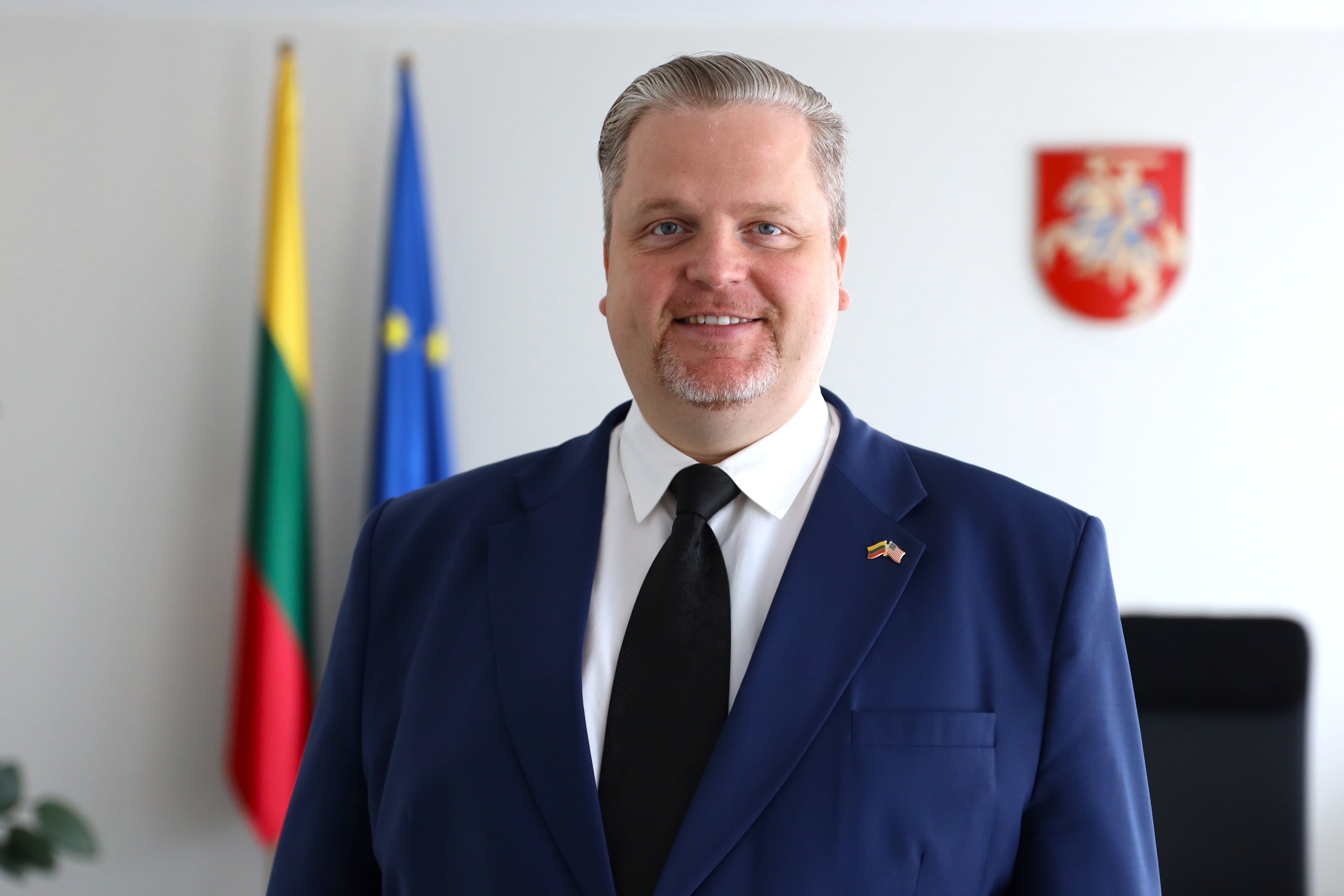
At the meeting with the ambassadors of Estonia, Latvia, Finland, Sweden, and Denmark, as well as the Deputy Head of the Norwegian Embassy, Minister of Finance Taurimas Valys presented the Government’s key priorities and their implementation progress and discussed Lithuania’s fiscal and economic situation.
"Although we face extraordinary challenges, it is encouraging that the Lithuanian economy is weathering them so far and continuing to show solid results. Economic growth is expected to remain close to 3 %; investments are projected to grow by approximately 4.6 % this year; and exports, despite slower global growth, are also expected to expand," Taurimas Valys said while presenting the current state of Lithuania's economy.
The Minister welcomed the fact that Lithuania maintains high sovereign credit ratings and noted that, to strengthen long-term competitiveness, the country is continuously improving the investment climate, fostering innovation, and mobilizing capital. "To this end, we have launched the 'Investment Highway' initiative and are prioritizing investments in sectors that will shape the future economy—including life sciences, advanced manufacturing, clean energy, high-tech industry, and defense—as these investments help boost productivity, strengthen economic resilience, and support the transition to higher value-added economic activities," the Minister emphasized, also highlighting the ILTE National Development Bank project, which aims to attract approximately EUR 6 billion in investments over the next four years.
Defense funding was a major topic of discussion at the meeting. The Minister emphasized that "for Lithuania, defense is not a temporary policy priority; it is a structural necessity. While Lithuania is significantly increasing defense spending, it does so while maintaining fiscal credibility and employing a diversified funding model that combines national budget resources, the Defense Fund, defense bonds, various European Union instruments—such as SAFE—and financing from international financial institutions."
Addressing the Government's key priorities, the Minister placed particular emphasis on enhancing defense capabilities and resilience, while ensuring that investments in education, healthcare, innovation, and infrastructure continue to support sustainable growth across all regions of Lithuania. The Minister noted that the primary goal of the Ministry of Finance is to balance these strategic priorities by securing sufficient funding for national needs while upholding sound public finances and fiscal discipline.
NB8 cooperation is an informal format that includes five Nordic and three Baltic countries that has been in place since 1990. It is based on regular meetings and close coordination across various fields, including foreign policy, security, energy, diplomacy, and defense. All NB8 countries are members of the EU or NATO, and this cooperation has become a model of regional integration.
Last updated: 06-10-2026