

In Dublin, debate on the competitiveness of the European economy and the impact of AI on the economy
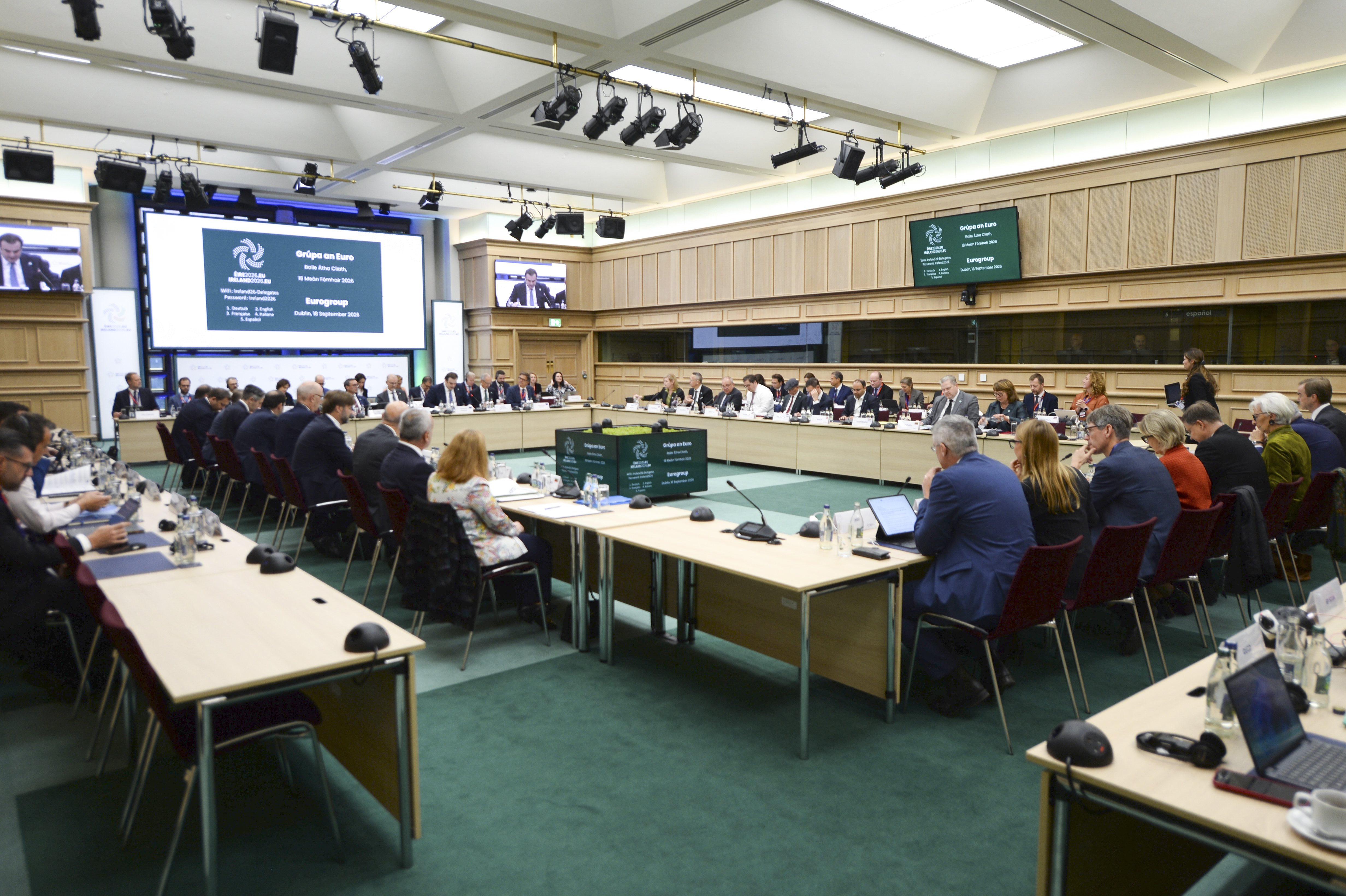
The Irish Presidency of the Council of the European Union (EU) will hold informal meetings of the EU Council of Economic and Financial Affairs Ministers (ECOFIN) and the Eurogroup (EG) on 18-19 September. Minister of Finance Taurimas Valys and European Ministers of Finance will discuss the competitiveness of the EU economy and the banking sector, increasing productivity, innovation in the financial sector and the impact of artificial intelligence on the economy.
At the Eurogroup meeting on Friday, ministers will review the latest economic trends and economic policy priorities, discuss productivity and economic growth in the euro area. During the meeting, Mathias Cormann, Secretary General of the Organisation for Economic Co-operation and Development (OECD), will present a report on productivity, competitiveness and growth in the euro area. The OECD identifies 5 key priorities to increase Europe's economic productivity: deepening the single market, channelling savings towards the most productive areas, accelerating the deployment of technologies, structurally reducing the burden of energy prices and strengthening energy security, and investing in enhancing essential skills and lifelong learning.
“Although Lithuania’s economy has remained relatively resilient in recent years, the geopolitical situation, rising tensions, conflicts and fragmentation are causing concern and negative effects. We are a small open economy and have a strong dependence on environmental factors. Therefore, it is the efficient use of innovation and its faster deployment that can be the engine of productivity in our economy", Minister of Finance T. Valys said ahead of the meetings.
At the informal ECOFIN meeting, EU finance ministers will aim to assess the opportunities and risks of financial innovation and discuss what policy, regulatory and supervisory developments are needed for the EU to foster innovation, growth and resilience.
The meeting will also discuss how to ensure that fast-moving digital innovations in finance, from fast payments to the tokenisation of financial assets, lead to real improvements in the well-being of households and businesses without increasing risks and retain the role of central bank money as a reliable basis for settlement.
“Lithuania has already developed an advanced digital financial environment, which makes extensive use of digital banking and payment services. The next step is to move from digitalisation to AI-enabled, real-time and more integrated financial services. However, here we must first address the main challenges – ensuring cybersecurity, consumer protection and sufficient financial literacy, and regulating the use of AI across the European Union, thus reducing the fragmentation of the single market," T. Valys stated.
According to the Minister, artificial intelligence, instant payments and other technologies could accelerate cross-border financial transactions and reduce their cost, which would allow innovative Lithuanian companies to expand their activities across the EU.
At the informal ECOFIN meeting, EU finance ministers will also discuss the proposals put forward in the European Commission's communication of July this year to strengthen the competitiveness of the European banking sector, with a view to revitalising the discussions on completing the EU Banking Union and publishing the relevant legal proposals in spring 2027. On Saturday, ministers will focus on the impact of artificial intelligence on Europe's economy and society. The opening statement will be opened by Kristalina Georgieva, Executive Director of the International Monetary Fund (IMF).
“Artificial intelligence is already changing the way we work, create and compete. It is important for Europe not only to regulate these changes, but also to be able to take advantage of them. We need to enable investment in AI, its deployment in business and the public sector, while making sure that safe technological progress translates into higher productivity, competitiveness and real benefits for people," the Minister of Finance stressed.
During his visit to Ireland, the Minister of Finance will also meet with Odile Renaud-Basso, President of the European Bank for Reconstruction and Development (EBRD), Keller-Sutter, Member of the Swiss Federal Council and Minister of Finance, and Kyriakos Pierrakakis, President of the Eurogroup and Greek Minister of Economy and Finance.
Last updated: 18-09-2026