

Vice-Minister of Finance J. Kizenevič: "Our goal is to keep Lithuania at the forefront of financial innovation"
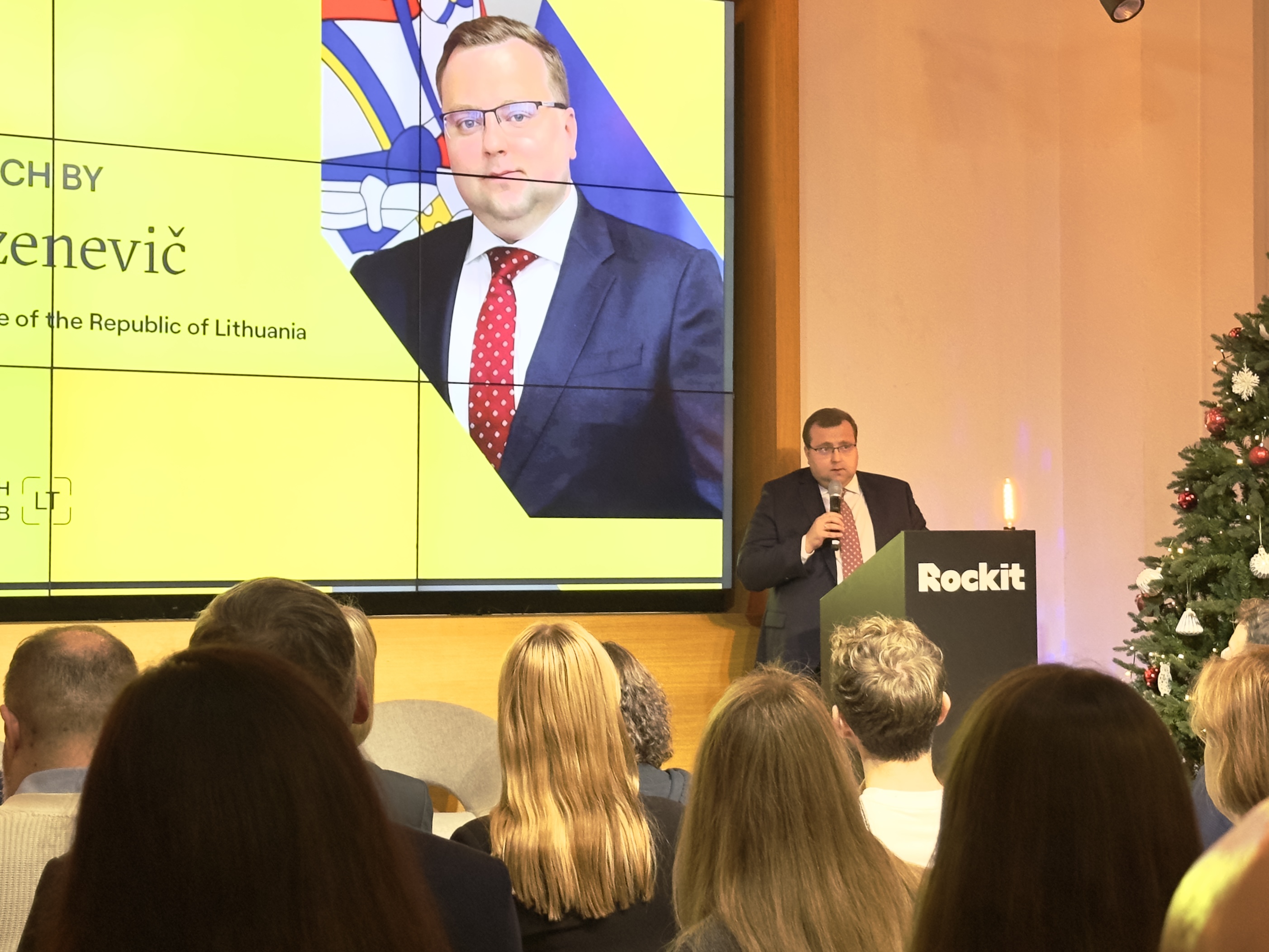
Vice-Minister of Finance Januš Kizenevič, participating in the Fintech event "Fintech Wrap-up of the Year" organised by ROCKIT, stressed that the strategic goals of Lithuania remain unchanged. It is about keeping Lithuania at the forefront of financial innovation – instant payments, artificial intelligence and digital identity – without losing sight of security and resilience.
“Almost a decade ago, Lithuania decided to focus on the development of FinTech, which took courage and paid off. During this period, Lithuania managed to establish itself as a European Fintech hub. And now we are constantly open to dialogue and new ideas – we are determined to work with the Fintech community to ensure that Lithuania remains one of the most reliable, transparent and forward-looking jurisdictions", Vice-Minister Kizenevič states.
According to him, growing competition in the financial sector is beneficial for every consumer, as it leads to a wider choice of services, lower prices and encourages the development of more customer-oriented, innovative products.
Two years ago, the Ministry of Finance and partners approved the Guidelines and Action Plan for the Development of Lithuania’s Fintech Sector 2023-2028. This year, the Action Plan was updated to better reflect market developments and new trends in financial technology.
"The Action Plan is on track to achieve its objectives, but better interaction between market players and regulation is essential to maintain growth rates and stay ahead. Our vision remains unchanged: to ensure that we maintain Lithuania’s leadership and that our FinTech ecosystem remains strong, resilient, future-ready and bold in creating innovations”, the Vice-Minister notes.
According to J. Kizenevič, artificial intelligence (AI) is already transforming financial services, and Fintech companies are invited to test and offer AI-based solutions, which will help build national regulatory expertise.
There should be clearer rules for blockchain-based solutions, as well as the training of anti-money laundering professionals, among the axes that will allow Lithuania not to lose ground in the future. It is proposed to step up cooperation with the Employment Service and promote careers in FinTech and strengthen national competences.
More attention is also expected to be paid to the assessment of Lithuania’s international competitiveness, where early identification of potential gaps and rapid response would help to remain at the forefront of financial technology.
Last updated: 09-12-2025